| OCR Text |
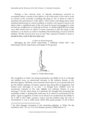
Show Chapter VII. Pseudorationality 314 those rationalizations are designed to accommodate. The background theory is of the arid sort described earlier, in which acceptable roles, relations, and behavior between African Americans and European Americans are conceived in such a way that the very idea of a resourceful, creative, insightful, flexible, ambitious, highly competent African American is by definition theoretically anomalous. The theory accommodates the anomaly by redefining the scope of the honorific concept of intelligence so as to exclude it. Or consider once more the gray blob on West Broadway. Again it is easy to imagine a theory of a particularly self-righteous and sour-minded sort, according to which this blob is, like so much else on West Broadway, nothing but one more capitalist plot to poison the minds of the unsuspecting masses and fill the coffers of media devils. The beauty of any favored theory of one's experience is a boon for the personal investor in provincial ones, namely the versatility of its constituent concepts. Pseudorationality, if not genuine rationality, is an available resource for literal self-preservation for even the most dogmatic and narrow-minded among us. For as Humpty Dumpty knew, we are free to use concepts in any way we like. 8. Pseudorationality in Application The following chapters are concerned primarily with the operation of pseudorationality as a response to first-person theoretical anomaly, i.e. to the self-protective measures we take against first-personal violations of our moral theory, and so against violations we ourselves commit against our morally inflected self-conceptions. I address both the violations themselves and, in Chapter X, the adequacy of the moral theories thus violated. So it will be convenient to both close this chapter and preview the following discussion by examining how all three of the pseudorational mechanisms just enumerated operate in tandem under such circumstances. Here is a real life example, as described by John Maynard Keynes. The scene is the Paris Peace Conference of 1919, in which the Allied powers - Great Britain, the United States, Italy, and France - are deciding how to carve up Germany and what amount of reparations for World War I are to be demanded of it. The question at issue is whether Germany should be required to reimburse the Allies for the pensions and separation allowances they pay to widows of soldiers who died in the war. On the face of it, this is an unusual and unwarranted request, since a country that goes to war may be presumed ordinarily to be responsible for shouldering the financial benefits it promises its soldiers as a condition of their enlistment. And Germany is already being forced to pay a great deal more than is consistent with jump-starting its economy sufficiently in order to make those reparation payments in the first place. The French under Clemenceau, the Prime Minister, are clearly committed to extracting enough in reparations to permanently cripple Germany's © Adrian Piper Research Archive Foundation Berlin |