| OCR Text |
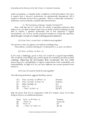
Show Chapter III. The Concept of a Genuine Preference 144 and the fully defined indifference relation in (4) like this: (7) A≥B and B≥A =df. {Pw(x.~y) v [~Pw(x.~y).~Pw(y.~x)]} . {[Pw(y.~x) v [~Pw(y.~x).~Pw(x.~y)]]}. Another way to understand subsententially the intuitive notion of indifference in the weak preference relation would be in terms of my concept of Epicurean indifference, i.e. (8) Pw(x v y), in which case weak preference would be rendered this way: (9) A≥B =df. Pw(x.~y) v Pw(x v y), and indifference strictly speaking, i.e. as in (4), like this: (10) A≥B and B≥A =df. [Pw(x.~y) v Pw(x v y)].[Pw(y.~x) v Pw(y v x)]. Looking now at (1), above, it seems clear that a weak preference ordering is transitive only if the intuitive notions of preference and indifference that define it are. Let us grant the unidimensional transitivity of preference. What about indifference? Is the intuitive notion of indifference itself transitive in all cases, on either the Stoic or the Epicurean interpretation? This is the first question. A second is whether either interpretation of the intuitive notion of indifference makes the fully defined Jeffrey-Bolker indifference relation in (4) transitive in all cases. The last will be what this implies for the thesis that indifference is an equivalence relation. Keeping in mind the restrictive presupposition of horizontal and vertical consistency mentioned in 6.2.1, we can call on an occasional truth table to suggest answers to these questions. QUESTION 1. IS THE INTUITIVE NOTION OF INDIFFERENCE ITSELF TRANSITIVE IN ALL CASES? Take first the Stoic interpretation. (5) above can be plugged into a transitivity rule as follows: (11) {[~Pw(x.~y).~Pw(y.~x)].[ ~Pw(y.~z).~Pw(z.~y)]} [~Pw(x.~z).~Pw(z.~x)] © Adrian Piper Research Archive Foundation Berlin |