| OCR Text |
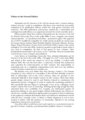
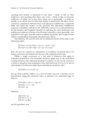
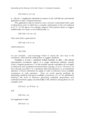
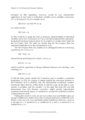
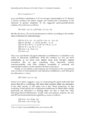
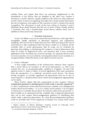
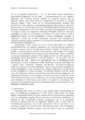
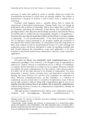
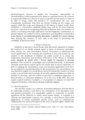
Show Chapter III. The Concept of a Genuine Preference 128 asserting that neither is preferred to the other - think of this as Stoic indifference, and asserting that either one is fine - think of this as Epicurean indifference. If either one is fine, then either one is preferable - or both are equally so, in which case it is false that neither is preferred to the other. Given a pairwise comparison between Stoic and Epicurean indifference, I adopt the latter and reject the former, on the grounds that Epicurean indifference expresses a healthier outlook on life. What this comes to is a strict preference for the intuitive and linguistic benefits of capturing the strict preference and indifference relations in terms of the Boolean connectives more generally, over aspiration to Savage's stoically austere aesthetic standards. But I explore some further considerations that justify this preference below. Nevertheless, (P) and (I1) each can be defined in terms of the other to the following extent: (P) Pw(x.~y) =df. Pw[(x v y).(~x v ~y).(x v ~y)] (I1) Pw(x v y) =df. Pw[(x.~y) v (y.~x) v (x.y)] Both (P) and (I1) embed w's satisfaction of conditions (2.a)-(2.b) above for being a conscious and intentional chooser with a genuine preference. Within a single occurrence of P, the rules of inference that apply to sentential propositions and sentential functions apply also to the individual variables between the outermost brackets it contains. So (P) can be viewed as a result of using the same translation rules that lead from (3.1) to (3. 2), but on subsentential constituents rather than sentential propositions, thus: (6) Pw{[(x v y).~(x.y)].~y}. (6) says that w prefers either x or y but not both, and not y. (6) then can be transformed using the canonical rules of inference for sentential logic as follows: (7) Pw{[(x v y).(~x v ~y)].~y} (8) Pw[(x .(~x v ~y)] (9) Pw(x.~y). Similarly, (10) Pw(x.~y) (11) Pw~(~x v y) (12) Pw ~(x y) are all equivalent, and © Adrian Piper Research Archive Foundation Berlin |