| OCR Text |
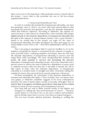
Show Rationality and the Structure of the Self, Volume II: A Kantian Conception 401 attacks on the moral and rational competence of the theorist, it cannot be genuinely resolved at all. 5.2. Recognition of Pain (1) gives us prima facie reason to suspect Smith's moral theory, because it violates (1) in its rules of conduct toward competitors for moral truth. This is damaging because it reveals that the claim to superiority of Smith's moral theory depends, not on a careful assessment of its intrinsic epistemic and practical merits; but instead on undermining Washington's status as a fully responsible moral agent. But there is more to be said about it than that, even putting aside for the moment the meta-level dilemma. Among the many things that Washington communicates to Smith is the mental and emotional anguish she feels at being the target of Vogeler's verbal assaults. Smith's response is to (a) minimize the moral importance of Washington's pain, by suggesting that her reaction is out of proportion to the events that purportedly caused it; (b) deny the causal effect of Vogeler's behavior, by suggesting that Washington's pain is largely self-generated by her tendency to see slights where none were intended; and (c) dissociate Washington's pain from Smith's constellation of significant moral priorities, uppermost among which is preservation of collegial equilibrium. Let us look at each of these reactive strategies more closely. (a) judges Washington's level of mental distress to be morally unjustified by the situation that purportedly gave rise to it. Thus it presupposes that there is some morally appropriate level of mental distress that is justified by the situation. Smith indicates what this is: It is the level of distress experienced by all untenured junior faculty members as they "run the gauntlet" of performance, evaluation, and interaction with their senior colleagues in their attempts to obtain tenure. One problem is that this inclusive criterion of justifiable mental distress is too inclusive, for it does not distinguish the kinds of professional behavior by senior colleagues which are themselves morally justifiable from those which are not. Therefore it cannot distinguish levels of mental distress in response to such behavior that junior colleagues ought to learn to take in stride from those that constitute justifiable grounds for protest. But a larger problem with (a) is that it is circular. The idea of an appropriate, justifiable level of mental distress implies that there are some morally justified ways of treating others that can be expected to cause them a certain, justified level of mental anguish - and no more. But it is hard to imagine how this level could be specified independently of the behavior that is expected to cause it, and of who could possibly be in a position to do so. To © Adrian Piper Research Archive Foundation Berlin |