| OCR Text |
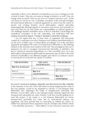
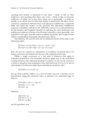
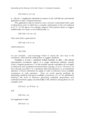
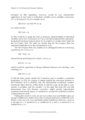
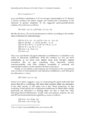
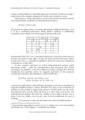
Show Chapter III. The Concept of a Genuine Preference 156 to any arbitrarily selected constraint Ck in n; or else x and y are equivalent for any Ck in n and x is preferred to y with respect to any subsequent constraint Ck+1. In (3), either earlier constraints select a single preferred alternative; or else the two alternatives are constraint-equivalent and subsequent constraints select the same single preferred alternative. (4) defines strict preference for x over y as the case in which these stipulations hold for the last constraint in n. To illustrate how to use this definition to move from constraints to preference, De Jongh and Liu offer an example in which Alice has the constraint sequence Cx > Qx > Nx, such that Cx means "x has a low cost," Qx means "x is of good quality," and Nx means "x is in a nice neighborhood;" and must choose between two houses d1 and d2 with the properties Pd1, Pd2, ~Qd1, ~Qd2, Nd1, and ~Nd2. Since d1 and d2 both bear P and lack Q, d1 and d2 are ordered on the basis of the last constraint Nx in the sequence, which determines Alice's strict preference of d1 over d2, i.e. Pref(d1,d2). De Jongh and Liu's definition is very useful for the case in which constraint predicates are ascribed to states of affairs that include properties additional to those for which one has an identified strict preference ranking, and also to those for which some ranked property fails to hold. However, why these should enter into a definition of strict preference is unclear. If both d1 and d2 have P and lack Q, then neither P nor Q enter into Alice's strict preference ranking. P does not because Alice gets P in either case (perhaps Px is "has a roof"); and Q does not because she fails to get Q in either case. Then the properties that she is actually required to strictly order are Cx and Nx; this can be done with a pairwise comparison plus the usual conditions (asymmetry, irreflexivity, transitivity), in the way suggested above (Section 8.(6) and (7)). De Jongh and Liu are interested in other varieties of order besides strict ones, and correspondingly non-strict conceptions of preference. Their definition of strict preference is meant to extend to these other varieties, as well as to belief contexts; but is less intuitively plausible for the standard case on which their analysis is based. Moreover, in De Jongh and Liu's notation, the heavy lifting in ordering preference alternatives is driven by the predicates that modify them, rather than - as in mine - the first-order logical structure of strict preference itself, whether this orders preference alternatives or the predicates ascribed to them. But in order to do this heavy lifting, De Jongh and Liu's constraint predicates must be given a strict and linear ordering antecedently, which reintroduces the connective problem that the concept of a constraint had seemed to dissolve. De Jongh and Liu use the mathematical connective ">" for this purpose, as is conventional. Through De Jongh and Liu's definition of strict preference, the linear ordering of constraint predicates given by ">" then determines the ordering of preference alternatives to which those predicates are ascribed. But this relation, and therefore the choice procedure in which it is nested, is subject to all of the objections I have already raised in this chapter © Adrian Piper Research Archive Foundation Berlin |