| OCR Text |
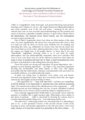
Show Chapter VIII. First-Person Anomaly 340 circumstances leads me to perform harmful actions involuntarily. Aristotle's account does not distinguish between cases in which this ignorance is justified and those in which it is disingenuous. (Who left the rat poison improperly labeled? And surely I should have noticed that the hand mop was warm and purring?) But I focus here on a slightly different kind of "ignorance of the particular," on which pity and pardon also may depend, but for which the inference to involuntariness is not so obvious, namely ignorance of oneself as a particular. This is the essence of denial in moral self-deception, in which I violate the symmetry requirement by making quite severe judgments about others' violation of some moral rule, without recognizing myself to be violating that rule in my own behavior. Because I fail to apply the concept, "violation of moral rule R" to my own theoretically anomalous violation of R, I fail to recognize my violation of R, and so am genuinely ignorant of that violation. In Volume I, Chapter II.2.3 I suggested the partial explanation for this phenomenon that a reformed Humean conception of the self would provide. Review some of the examples of this kind of ignorance of the particular described there: Mildred, the Machiavellian social climber, complains bitterly about the Machiavellian social climbers she must contend with - and plots to destroy them. Mortimer, the consummate hypocrite and liar, fulminates earnestly to his friends against the evils of hypocrisy and lying - fabricating examples of his own honesty to prove his points. Mavis roundly condemns Trevor - for being judgmental. In all such cases, the agent sincerely holds a moral principle and fails to recognize his own violations of it - indeed, sometimes violating the principle in the act of denouncing violations of it in others. An observer of the scenario may wonder how anyone can be so blind to her own faults, even while discussing them in the abstract. The oversight often seems so glaring that we may find it difficult to believe that no simple hypocrisy or self-deception is involved. But hypocrisy and self-deception both presuppose some level of awareness of the truth behind the deception. However, my analysis of pseudorationality implies that in ignorance of oneself as a particular, a necessary precondition of knowledge is lacking. Failing to subsume one's own behavior as a concrete particular under the available and appropriate concepts is an example of denial of a special kind, in which it is one's own, significant intentional behavior that is lost. Rational disintegrity under these circumstances consists in an interior disjunction between what one intentionally conceives oneself to do, and the significant intentional behavior one actually performs. Without its organizing rule or principle, this intentional behavior remains - to quote Kant - "nothing but a blind play of representations, less even than a dream" (1C, A 112). © Adrian Piper Research Archive Foundation Berlin |