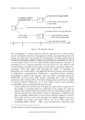
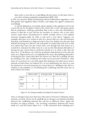
| OCR Text |
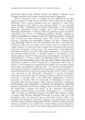
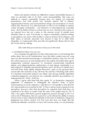
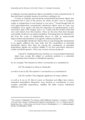
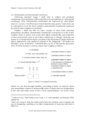
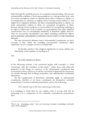
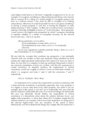
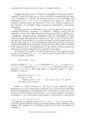
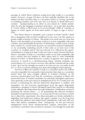
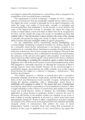
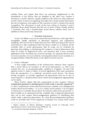
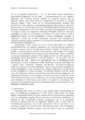
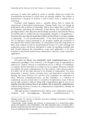
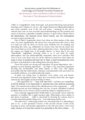
Show Rationality and the Structure of the Self, Volume II: A Kantian Conception 143 (2) either A≥B or B≥A or both respectively. Then use "≥" to define preference and indifference, as follows: (3) Preference =df. A>B iff A≥B but not B≥A. Show that preference satisfies Irreflexivity (not A>A), Asymmetry (if A>B then not B>A), and Transitivity (if A>B and B>C then A>C). (4) Indifference =df. A ≈ B iff A≥B and B≥A (This is also Luce and Raiffa's definition of indifference.) Show that indifference thus defined is an equivalence relation: it satisfies Symmetry (if A≈B then B≈A), Reflexivity (A≈A), and Transitivity (if A≈B and B≈C then A≈C). Let us now distinguish between the intuitive notion of indifference that enters into the primitive weak preference relation, and the fully defined indifference relation as spelled out in (4). The Jeffrey-Bolker improvement on Ramsey's argument is to defend the claim that indifference is an equivalence relation by arguing that the fully defined indifference relation satisfies these three criteria. Let us grant that any viable notion of indifference must satisfy Symmetry and Reflexivity. But in Volume I, Chapter IV.2.2, in commenting on Ramsey's axiom (A3'), I offered some reasons to doubt whether the indifference relation always satisfied Transitivity; and intuitively, it is hard to see what is irrational about my indifference between cherries and apples and between apples and peaches, but strong preference for peaches over cherries, even if my pairwise comparisons adhere to a unidimensional criterion such as flavor. The reason for this is that the notion of indifference in play in these three pairwise comparisons is an intensional one. So I wish to press hard on the JeffreyBolker thesis that indifference satisfies transitivity; and then to question what this implies even if it does. First, if indifference is to be defined in terms of weak preference as an undefined primitive relation in (4), then how is the intuitive notion of indifference in the weak preference relation itself to be interpreted subsententially? There are two possibilities. One way would be to interpret it as Savage's Stoic indifference, i.e. (5) ~Pw(x.~y).~Pw(y.~x). In this case weak preference would look this way: (6) A≥B =df. Pw(x.~y) v [~Pw(x.~y).~Pw(y.~x)], © Adrian Piper Research Archive Foundation Berlin |