| OCR Text |
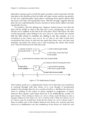
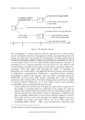
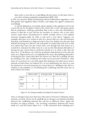
Show Chapter XI. Xenophobia and Moral Anomaly 438 4.3. Higher-Order Political Discrimination Next I examine a more sophisticated manifestion of political discrimination that is supervenient on the first-order political discrimination just discussed. I shall call this higher-order political discrimination. As in firstorder political discrimination, a higher-order discriminator manifests in behavior the attitude in which a particular property of a person that is irrelevant to judgments of that person's intrinsic value or competence, e.g. her race, gender, class, sexual orientation, or religious or ethnic affiliation, is seen as a source of disvalue or inferiority, i.e. as a primary disvalued property. By second-order political discrimination, I will understand the attitude within which a primary disvalued or valued property in turn confers disvalue or value respectively on further properties of the disvaluee or valuee respectively. I shall refer to these latter as secondary disvalued (or valued) properties. 4.3.1. Transitivity and Comprehensiveness Second-order political discrimination works in the following way. A disvaluee's primary disvalued property, say, being a male homosexual, causes the second-order political discriminator to view some further property of the disvaluee, say, being an eloquent speaker, in a negative light. The respect in which this further property is seen as negative depends on the range of possible descriptions it might satisfy, as well as the context in which it appears. Thus, for example, the second-order political discriminator might view the disvaluee's eloquence as purple prose, or empty rhetoric, or as precious, flowery, or mannered. These predicates are not interchangeable for the second-order political discriminator. Nor are they taken to be arbitrarily applied. The second-order political discriminator will choose from among them to express his disvaluation in response to contingencies of the situation and individuals involved. He may, in all sincerity, explain his disvaluation with reference to impartially applied aesthetic standards, or to his ingrown, native suspicion of big words. But the crucial feature of second-order political discrimination is that the actual explanation for his disvaluing the person's eloquence, in whatever respect he disvalues it, is the person's primary disvalued property of being a male homosexual. Does second-order political discrimination as thus defined ever actually occur? Some familiar examples of it include attaching disvalue to a person's having rhythm, by reason of its putative connection with her being black; or attaching disvalue to a person's being very smart, by reason of its putative connection with his being Jewish. Both of these cases are examples of politically discriminatory stereotyping, in which some arbitrary property is falsely taken to be characteristic of persons of a particular race or ethnic or religious affiliation. But I mean to call attention to a slightly different feature of these examples. Someone who practices second-order political discrimination regards a black person who has rhythm, as vulgar, salacious, © Adrian Piper Research Archive Foundation Berlin |