| OCR Text |
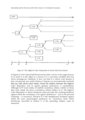
Show Rationality and the Structure of the Self, Volume II: A Kantian Conception 167 before but, even more important, with anything that can be projected about the choices he will subsequently make (RDC 12; also see PRR 219)." An only slightly less myopic agent might make such projections and assume he will follow through on his projected future choices when the moment occurs, but be regularly and predictably wrong. Myopic choice expresses a separability condition on rational choice, i.e. that given a temporal sequence of choices within an action plan, any choice indexed to a particular point within that sequence is approached as though it were the first within the action plan, i.e. as though the particular branch of the decision tree at which the choice point appears were the origin of the tree. At each such point, the consequences of previous choices are regarded not as prior commitments with which one must coordinate one's present choice, but rather as external environmental constraints on present choice to which one bears no deliberative relation. Like other external events, they impose merely causal restrictions that condition the background against which the choice is made. What is decided at time t has no force at time t+1, unless at t+1 there is independent ratification of that plan from the consequentialist [i.e. utilitymaximizing] perspective of t+1. That simply implies that the notion of a commitment to a plan has no meaning in the context of [separability] (RDC 208). It is as if one proceeded from one choice to the next rather like Clyde in Volume I, Chapter IV.3, who rethinks all of his priorities from one moment to the next, erasing past choices from his memory as he turns his attention to the next one. Myopic choices often engender what I called in Volume I, Chapter IV.3 time-dependent psychological inconsistencies and what McClennen, Strotz, and Hammond call dynamic inconsistency. 3 Dynamic inconsistencies occur when later choices contradict or subvert the intended consequences of earlier choices. The paradigmatic example is that of Ulysses' later rebellion, upon hearing the Sirens' song, against his earlier resolve to ignore them and continue on his way home. McClennen's example is of resolving to diet in the morning, then violating that resolve at that evening's dinner. Strotz finds an empirical generalization in such examples. He says, The concept of myopic choice was originally introduced in R. H. Strotz, "Myopia and Inconsistency in Dynamic Utility Maximization," The Review of Economic Studies 23, 3 (1955 - 1956), 165-180, and significantly developed in Peter Hammond, "Changing Tastes and Coherent Dynamic Choice," The Review of Economic Studies 43 (1976), 159-73; and "Dynamic Restrictions on Metastatic Choice," Economica 44 (1977), 337-50. Although my approach to the problem in Volume I, Chapter IV.2.3 and 3, as well as my solution in this chapter are quite different, they converge on the same issues that are under scrutiny here. 3 © Adrian Piper Research Archive Foundation Berlin |