| OCR Text |
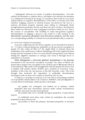
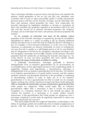
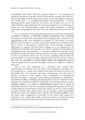
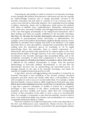
Show Rationality and the Structure of the Self, Volume II: A Kantian Conception 77 them through the synthetic process of conceptual understanding. This process systematically combines r2-level representations in a rule-governed way, such as to form concepts by which we identify these states of affairs as objects, i.e. as independent of ourselves as subject; and as having certain further, r3- and higher-level empirical attributes. By thus conceptualizing them as objects, we trade unmediated relation to them for conceptual recognition of them. Because rule-governed synthesis is a precondition for recognizing anything as an object of experience at all, for Kant, no representation can enter empirical consciousness save as conceptually mediated, as Brandom rightly observes. Thus we necessarily conceptualize any object, including intentional objects, and in particular subsentential constituents toward which we take intentional attitudes. We take intentional attitudes toward subsentential constituents; we have concepts of that which the resulting nonsentential intentional object represents. So, for example, we have concepts both (i) that the number 3 has religious significance in many cultures [or, alternately: of the number 3 as having etc.] and (ii) of the situation in Africa. In the following sections, I am concerned mostly with concepts, i.e. what 15 Armstrong calls the "furniture of the mind," rather than with either the properties of the things we conceive, or the subsentential constituents that correspond to them. However, it will be convenient to approach the taxonomy of concepts through that of things, properties, and subsentential constituents themselves. Do the requirements of theoretical rationality apply to subsentential constituents, whether or not those constituents are themselves sentential propositions? Consider sentential propositions such as the following: (13) I intend to go to the store and not go to the store It is tempting to think that we can explain what is wrong with (13) by analyzing it as a conjunction of two mutually contradictory propositions, thus: 15 See D. M. Armstrong, Belief, Truth and Knowledge (London: Cambridge University Press, 1973), Chapter 5. © Adrian Piper Research Archive Foundation Berlin |