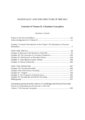
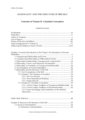
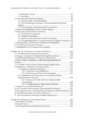
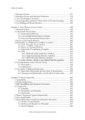
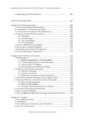
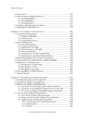
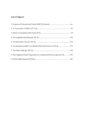
| OCR Text |
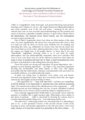
Show PART TWO: REALITIES Now reason enjoins its prescriptions relentlessly, without holding out any prospect to inclination; therefore, so to speak, with disregard and neglect of these impetuous and therewith so seemingly humble claims (which refuse to be subdued by any command). From this there arises a natural dialectic, that is, a propensity to pseudorationalize [vernünfteln] these strict laws of duty - to call into doubt their validity or at least their purity and rigor, and where possible to make them more accommodating to our wishes and inclinations; that is, basically to corrupt them and destroy their entire dignity, which in the end even ordinary practical reason itself cannot approve (G, Ak. 405). _____________________________ With the ideals of transpersonal rationality, consistency, and moral motivation now in place, I turn next to extended discussion of the non-ideal realities in which these ideals serve - psychologically, morally and socially - as distant reminders of the standards of performance to which we naturally aspire. This second part of the discussion recapitulates and develops analysis of the conflict between transpersonal and egocentric rationality detailed in Chapter I - with closer attention now to the practice of philosophy itself on which that Chapter focused - by extending further the exploration of motivationally ineffective intellect begun in Chapter V.4.2.1. That analysis of moral motivation was placed in Part I because it disregarded familiar, realworld impediments to enacting the dictates of reason, including moral dictates. Part II takes those impediments for granted, and focuses on the downward cognitive and psychological accommodations we make to the reality of our rational and moral insufficiencies. Just as the concepts of horizontal and vertical consistency are key to understanding how reason guides action under ideal circumstances, the concepts of literal selfpreservation introduced in Chapter V.2, and of pseudorationality introduced in Chapter VII below, are key to understanding how reason guides action under actual circumstances. So they figure prominently in subsequent chapters. Chapter VIII.4 surveys selectively some of the accounts of pseudorationality furnished by the history of philosophy, of course with particular attention to Kant. All of these historical accounts identify systematic deviations from an ideal of rational integrity that is implicit in classical logic and presupposed by Aristotle, Kant and Nietzsche. But all of the accounts themselves are scattered and cursory rather than systematic. Consequently, I intend my account of pseudorationality first to consolidate |