| OCR Text |
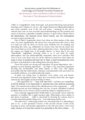
Show Chapter III. The Concept of a Genuine Preference 114 matter, the "r" and "p" that often replace them in more recent treatments - in fact are not really connectives at all. "≥" and ">" (and "r" and "p") instead express intentional attitudes toward pairs of intentional objects. (6') - (14') shows that we are not free simply to add "≥" (or "r") on to the list of classical Boolean connectives and perform the same sorts of logical operations on it as we are used to doing on them. Hence we similarly cannot perform the standard logical functions on the variable terms related by "≥" plus the classical Boolean connectives in (6) - (14) either, because all such terms embed an extra, intentional operator within their logical substructure, and all make assertions the intensional content of which consequently resists the degree of intersubstitutability that the Boolean connectives require. But when the intensional structure of these assertions is exposed, further problems ensue. Take (9), transitivity for strong preference. For what kind of chooser does (9) hold true? Not for an actual chooser, since (9) is not a prediction. And not for an ideally rational chooser under conditions of uncertainty, since in that case the chooser's preferences are not epistemically transparent (for example, from the fact that I prefer peaches to pears and pears to cherries, does it follow that I prefer peaches to cherries? It is hard to see why it should). Might it hold true for an ideally rational chooser S under conditions of full information? It seems not. (9) can be paraphrased in a way that exposes its intensional structure as follows: (9") If it is the case that (9".1) S prefers F to G or is indifferent between them, and (9".2) it is not the case that S prefers G to F or is indifferent between them; and that (9".3) S prefers G to H or is indifferent between them, and (9".4) it is not the case that S prefers H to G or is indifferent between them; then it is the case that (9".5) S prefers F to H or is indifferent between them, and (9".6) it is not the case that S prefers H to F or is indifferent between them. Note that indifference does not satisfy symmetry in either of the antecedent conjuncts of (9"), or in its consequent. (9"), in turn, would seem to imply that if it is the case that (9".7) S is indifferent between F and G, and (9".8) S is indifferent between G and H; © Adrian Piper Research Archive Foundation Berlin |