| OCR Text |
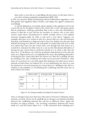
Show Rationality and the Structure of the Self, Volume II: A Kantian Conception 371 6.1. Incompatibilities First, it would seem that the agent whose character is less than sterling may elicit from us prima facie incompatible judgments, in accordance with our conflicted and tentative beliefs about her. According to the above analysis, we may judge both that she should keep her promises (if she behaves as the theory describes), and that she should not keep her promises (if her actions undermine the theory, as we suspect they may). However, the incompatibility is superficial. For there is a semantic asymmetry between the former, theoryaffirming judgment and the latter, theory-undermining one. We often make theory-undermining judgments such as these: (19) Veronica ought to rejoice at the philosophical howler in Avery's recent article. (20) Floyd has never been able to keep a secret; why should he on this occasion? (21) Elmer shouldn't keep his promise, unless he has recently undergone moral reconditioning. 7 (22) What is this sudden change of heart? You're not supposed to be generous when it doesn't serve your interests! In such judgments we express, among other things, the wish at the heart of all expressions of cynicism, i.e. to be proved wrong. This wish has no parallel in the former, theory-affirming judgment, where it is replaced by a hope of being proved right and a fear of being proved wrong. Because we naturally want our moral theory to be true more than we want our cynical expectations confirmed, our theory-affirming judgment that an agent should keep her promises carries more psychological weight than our theory-undermining judgment that she should not. Indeed, that most of us do not exhibit vigilant suspicion of others by carefully choosing all our words, taping all our phone calls, and photocopying all our correspondence in the anticipation of betrayal, testifies to the psychological primacy of theory-affirming judgments. The semantic asymmetry between these two types of judgment prevents a deep logical incompatibility between them. 6.2. Incorrigibilities Second, my analysis may seem to imply, further, that even if we retain some commitment to the truth of the ideal theory, those we identify as cases of what we might call radical incorrigibility, are released from any obligation to behave as it describes. This would be a serious flaw in my account, since I argued in Volume I, Chapter IX.4 that a moral theory must be able to generate Clearly we can distinguish between theory-affirming and theory-undermining senses both of "should" and of "should not". 7 © Adrian Piper Research Archive Foundation Berlin |