| OCR Text |
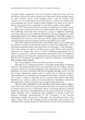
Show Chapter VI. Moral Interiority 248 3. Self-Absorption and Vicarious Possession Next consider two extremes of imaginative object. At one end of the spectrum, there is the kind one effortlessly calls to mind with no cue beyond that of a momentary association or verbal description. For example, I now ask you to imagine yourself rising from your seat, flapping your arms vigorously, and sailing aloft. It probably does not require very much mental concentration for you to activate the required visual imagery and subliminal sensations; the mere verbal description may suffice. However, easy come, easy go. Virtually any actual internal or external cue will suffice to banish that fantasy: the ringing of the telephone, your shifting in your chair, or something you read here that momentarily catches your attention. Call this a surface object of imagination. At the other end of the spectrum, depth objects of imagination call forth a deeper psychological investment of energy and attention. They occupy a larger proportion of one's waking consciousness, and may either replace or vividly enhance reality as one experiences it. For example, I read a firstperson account by a battered wife of her experiences, and my emotions as well as my thoughts are fully engaged, not only as I am reading, but afterwards as well. My imaginative reconstruction replaces reality as I am absorbing her story, and alters my view of the world afterwards. Whereas as surface objects of imagination barely affect the quality of one's interiority, depth objects shape it profoundly in ways that may permanently alter one's perspective. Most imaginative objects lie somewhere between these two. Clearly this taxonomy of imaginative objects is far from exhaustive. Nor does it sort imaginative objects into those we visualize and those we conceive in some more abstract or schematic sense: I may be deeply involved in imagining the outlines of my cosmological theory of the universe, or only momentarily distracted by the visual image of the groceries I must purchase on the way home. Whereas nonmodal imagination precludes imaginative conceptualization, modal imagination, as already suggested, supplements rationality to produce it. Nor does the distinction between depth and surface objects of imagination classify such objects by content: Penrod Schofield was so fully engaged by the first-described fantasy that even Miss Spence's repeated shouting scarcely sufficed to return him to the reality of the classroom. Rather, I mean to distinguish among such objects of imagination according to the degree of one's momentary experiential involvement in them. Some such objects hold us in their grip, while others slide over the surface of our interiority while barely disrupting our emotional and psychological awareness at all. Sometimes we treat as objects of surface imagination those we are called upon to treat in depth. For example, charitable concerns often bulk-mail letters to potential contributors that describe in vivid detail the plight of those for whom they wish to garner support. Upon receiving these mailings, one © Adrian Piper Research Archive Foundation Berlin |