| OCR Text |
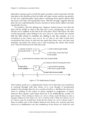
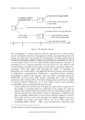
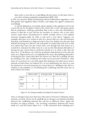
Show Chapter VI. Moral Interiority 276 ginger beer bottle, not by any pro-attitude toward peeling the label off the ginger beer bottle, but rather by anxiety, or habit, or the perception of the dampness of the bottle. If I am prevented from doing so, I may experience neither disappointment, nor frustration, nor regret. Hence that my action is directed toward the achievement of this object does not imply that it is this object that causes me to pursue it. Moreover, even if I did have a pro-attitude toward this object, even this fact would not imply that this pro-attitude is what causes me to pursue it. It is an open question whether it is my proattitude toward peeling the label off the ginger beer bottle or my anxiety that causes me to do so. The purpose of an action need not supply its motive. Of course some purposes of action do supply its motives, as when the intentional object at which my action is directed is one I desire, or aspire, or resolve to achieve. Desires, aspirations, and resolutions are occurrent psychological causes of action that take the agent's purposes as intentional objects and would not be motivationally effective without them. These are the cases in which it makes sense to describe the agent as having a motivationally effective "pro-attitude" toward the purpose of the action. Call these causes of action forward-looking motives. Not all forward-looking motives are desires, and not all action is caused by forward-looking motives. For there are other occurrent psychological causes of action that are unrelated to the purpose of my action, and instead presuppose perceived intentional objects as causes. I considered some of these briefly in Volume I, Chapter VI.5.1 - 2; and at greater length in Chapter V.4.1 above. Here is a further example: perceived traffic jams cause frustration, which motivates honking the horn. Honking the horn is a fully intentional action. I may have a pro-attitude toward honking the horn, but then again I may not. In either case, honking the horn need not be motivated by its purpose. Instead it may be motivated by an emotion that is caused, in turn, by the perception of an intentional object. Call such psychological causes backward-looking motives. My distinction between forward- and backward-looking motives parallels Michael Stocker's distinctions between the "in order to"/"for the sake of" and the "out of"/"from" locutions.12 My claim is that much action is motivated solely by backward-looking motives. Backward-looking motives, in turn, may be of three kinds. In the example just described, the immediate psychological cause of action is an emotional reaction to a perceived intentional object. Describe such motivationally effective emotional reactions as affectively motivating states. Affectively motivating states constitute one kind of backward-looking motive. But sometimes perceived intentional objects can elicit a goal-directed behavioral response almost automatically, without the intervention of an affectively See Stocker's "Values and Purposes: The Limits of Teleology and the Ends of Friendship," The Journal of Philosophy LXXVIII, 12 (December 1981), 747 - 765. 12 © Adrian Piper Research Archive Foundation Berlin |