| OCR Text |
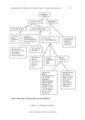
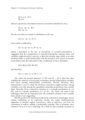
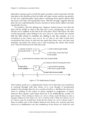
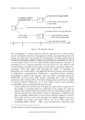
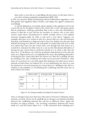
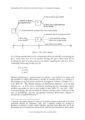
Show Chapter IV. McClennen on Resolute Choice 174 resolve is costly both from the earlier and from the later standpoint. McClennen's proposal is one that argues for a model in which the plan that is taken to be regulative of subsequent choice is one that can be defended from the perspectives both of the time of planning and the time of choice. That defense turns on the consideration that the kind of coordination over time that planning makes possible economizes on scarce resources that are valued both at the time of planning and the time of choice (PRR 241). McClennen's concept of resolute choice offers a single agent a two-fold utilitymaximizing justification of rule-guided behavior under some circumstances: First, it is justified when both earlier and later selves see the cost of violating the earlier resolve. Second, it is justified when both earlier and later selves prefer it to the costs of intrapersonal conflict. 5. Resolute Choice and Genuine Preference Actually McClennen's concept of resolute choice is justified even when neither of these conditions obtain. That is, it is justified even when utility in the unreconstructed, minimalist sense of (U) is not maximized. This means that it can be, after all, "unhinge[d] from what [McClennen] take[s] to be its basis, namely, pragmatic considerations (RDC 160, fn. 12 (285))." McClennen himself resists this conclusion. However, I argue in Section 7 below that thus unhinging resolute choice from questions of utility-maximization has a consequence McClennen endorses, namely it not only leaves open but in fact implies the possibility that even if the agent did not as a matter of fact resolve at some point before ni to choose in a certain fashion at ni, still one can consider as relevant to the question of what is to be chosen at ni what one would have resolved to do at some antecedent point if one had (counterfactually) considered the matter (ibid.). That is, decoupling McClennen's model of resolute choice from its utilitymaximizing preconditions exposes its nomological character and identifies it as not merely a rule but rather what Kant would describe as a law of rationality. The dilemma of naïve (as opposed to sophisticated) myopic choice represented in Figure 5 and described in Section 2 above can be expressed in the terms used in Volume I, Chapter IV.2 to describe a cyclical ranking (Ct): © Adrian Piper Research Archive Foundation Berlin |