| OCR Text |
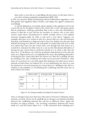
Show Chapter II. Reason in the Structure of the Self 82 This kind of holism is different from the language holism of HVTR, which stipulates an inferential relationship among all constituents and sentences of a language as an interconnected matrix, such that any scheme that lacks that inferential interconnection must be atomistic rather than holistic. For example, Brandom endorses a Sellarsian brand of inferential concept holism that links having concepts with giving and having reasons that can justify beliefs and claims (MIE 89-90). But he thinks concept holism is independent of representationalism: [T]here is prima facie no reason why the fact that some object or property is represented by one simple idea, term, or predicate should be relevant to what is represented by others. Representational relations between nonintentional objects or properties and the intentional representings of them might be treated (as the empiricists in fact treat them) as separate building blocks that, when properly put together, determine what inferences are good in the sense of preserving accuracy of representation. Serving this role seems compatible with these presentational relations being quite independent of one another. Knowing what one state or expression represents need convey no information at all about what anything else might represent (MIE 90). However, if my argument above is valid, Brandom's view depends on a misrepresentation (so to speak) of what a concept is. Predicates are not the kind of thing that could hold of only one singular term, and my concept of it could not apply to only one instance of the thing that singular term denotes. The interpretation of concepts as representational does not reduce them to "separate building blocks that, when properly put together, determine what inferences are good in the sense of preserving accuracy of representation," because concepts represent classes of objects that bear the relevant property and thereby distinguish themselves from others that do not. The holistic regress has certain implications for the concepts with which we make the world and ourselves rationally intelligible to ourselves. First consider the holism of the holistic regress, i.e. the implication of it that we cannot recognize something as being of a certain kind, unless by comparison with other things to which it is similar, and by contrast with other things from which it is distinct, relative to certain properties. Clearly, such comparisons and contrasts imply satisfaction of the law of noncontradiction, i.e. that we cannot conceive a thing or property simultaneously as what it is and what it is not. Here what satisfies the law of noncontradiction is not the relation as we conceive it between things and their higher-order properties. So this requirement cannot be expressed by the relation between a predicate letter and the objects that fix its extension, thus: (14) (∀x)~(Fx . ~Fx) © Adrian Piper Research Archive Foundation Berlin |