| OCR Text |
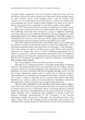
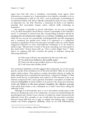
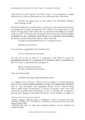
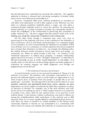
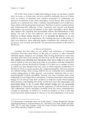
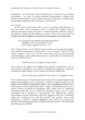
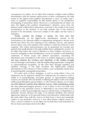
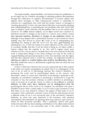
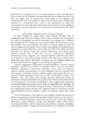
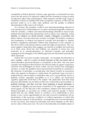
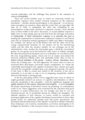
Show Chapter II. Reason in the Structure of the Self 86 same higher-order kind as is the kind I originally recognized it to be. So, for example, if I recognize something as a three-dimensional thing, I also must be able to conceive it as a thing of a certain length; if I recognize going to the store as a tedious errand, I also must be able to recognize it as nothing extraordinary. Otherwise it would be possible for me to recognize something t as having a certain property P, and also as having the negation of some further property P1 that P implies. In that case I would not have succeeded in making t rationally intelligible in terms of P in the first place. More generally, I must conceive the higher-order properties by which I recognize something as logically entailed, as a matter of conceptual necessity, by the relevant lower-order ones. This is to say that (B) any particular ci in S is either (1) an instantiation of some other cj in S; or (2) instantiated by some other ck in S; i.e. S is minimally coherent; (C) for any cognitively available particular thing t, there is a cj in S that t instantiates, i.e. S is complete. (B) says that the concepts that constitute my perspective S are minimally coherent with one another, in that each particular thing identified by them satisfies the subject-predicate relationship with respect to at least one other of them. (C) says that S is complete, in that any particular thing itself of which I am conscious instantiates at least one of them. Call this the requirement of vertical consistency. In standard notation, the requirement of vertical consistency would run roughly as follows: Given an individual variable a to which t is assigned, and terms F and G with the extensions P and P1 respectively, (VC) Fa [(∀x)(Fx Gx) Ga] It is important not to confuse the requirement of vertical consistency with a claim about the transitivity of predication generally: Not every property is of a higher or lower order than every other property. The claim is not, for example, that if the pencil is red and red is fashionable this year, that the pencil is therefore fashionable this year. For not all red things are fashionable this year (e.g. firetrucks, blood). Rather, the requirement of vertical consistency is a transitivity claim about the relation between lower- and higher-order properties, i.e. those that satisfy (VC). It implies simply that the relations between our concepts of the lower-order properties of a thing and of the relevant higher-order ones are transitive: If the pencil is threedimensional, and three-dimensional things have length, then the pencil has a © Adrian Piper Research Archive Foundation Berlin |