| OCR Text |
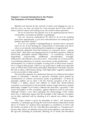
Show Chapter I. General Introduction to the Project: The Enterprise of Socratic Metaethics 12 There can be little doubt that Hampshire's version of the Socratic ideal of philosophical dialogue requires of us a standard of intellectual and moral conduct to which we are, most of the time, intellectually and morally inadequate; and so that the ideal of transpersonal rationality so valorized by a "slave morality" may be - for us - little more than that. Here the moral inadequacy exacerbates the intellectual inadequacy. It is difficult enough to keep in mind at one time more than a few steps in an extended and complex philosophical argument, or fully appreciate the two opposing views that must be reconciled, or grasp the point of your opponent's criticism as he is voicing it while you are mentally both formulating your refutation of it and refining your view so as to accommodate it. But these purely intellectual limitations are made so much worse by what Kant calls "certain impulsions" of "the dear self" that obscure or interfere with the clarity and sure-footedness of the reasoning process: the need to be right or amusing at another's expense, the need to prove one's intelligence, the need to triumph, or to secure one's authority, or to prove one's superiority, or mark one's territory; or, more viciously, the need to intimidate one's opponent, to attack and crush her, shut her up, express one's contempt for her, exact revenge, teach her a lesson, or force her out of the dialogue. All of these needs exist on an ethical continuum, from the merely regrettable or pathetic at one end to the brutal or sadistic at the other. The essence of our moral inadequacy to Hampshire's Socratic ideal of philosophical conduct is our temptation to use even the limited skills of philosophical dialogue we have as a tool of self-aggrandizement or a weapon to bludgeon our opponent, rather than to arrive at recognizable truths we can both embrace. This temptation vies with our longing for wisdom, imagination and kindness - and sometimes loses the struggle. And then it finds vivid expression in certain familiar philosophical styles most of us have encountered - or deployed - at one time or another. For example, we have all at some point surely met - or been - the Bulldozer. The Bulldozer talks at you, at very great length, rather than to you; and seems to understand by "philosophical dialogue" what most people understand by "lecture." Indeed, Bulldozers may make excellent lecturers, and lecturing is an excellent training ground for bulldozing. The Bulldozer expounds at length his view, its historical antecedents, and its implications; anticipates your objections to it, enumerates each one, complete with examples, and refutes them; explains the views of his opponents and critiques them; and no doubt does much, much more than this, long after you have excused yourself and backed away with a muttered apology about needing to make a phone call. Sometimes the Bulldozer seems almost to induce in himself a trance state by the sound of his own words, and seems impervious to your ineffectual attempts to get a word in edgewise. And should you momentarily succeed in getting a word in edgewise, rest assured that there will not be many of those. For any one of © Adrian Piper Research Archive Foundation Berlin |