| OCR Text |
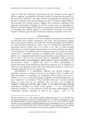
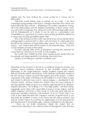
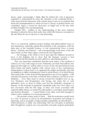
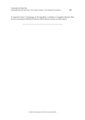
Show Rationality and the Structure of the Self, Volume II: A Kantian Conception 153 its taste, and coffee to chocolate for its texture; that she continued to prefer each flavor of ice cream for one of its properties, and also something that was not that flavor for a different property; hence that her choice dilemma could not be described as a typical cyclical ranking. Recall also that the appearance of cyclicity in Gertrude's preference ranking arose out of her failure to rank independently the relevant properties themselves - sweetness, taste, and texture - of the alternatives she confronted. In the notation of subsentential predication I am proposing, the inconsistency arising out of Gertrude's continuing preference for each flavor of ice cream for one of its properties, and also something that is not that flavor for a different property can be more accurately expressed. Let individual variables a, b, and c denote chocolate, vanilla, and coffee ice creams respectively. Then Gertrude's preference for each of chocolate, vanilla, and coffee for one of its properties, and also something that was not that flavor for a different property is symbolized as follows: (5) Ps(a.~a) . Ps(b.~b) . Ps(c.~c). That is, Gertrude's preference as originally stated violates (Irr) and hence is formally self-contradictory. And the right way of ironing out this selfcontradiction is for Gertrude to rank independently the relevant properties themselves - sweetness, taste, and texture - of the alternatives she confronts. Let the predicate letters S, T and R denote sweetness, taste and texture respectively. Then Gertrude's task is to consider whether perhaps (6) (∃P)(S)(T)(R)[Ps(S.~T) . Ps(T.~R) . Ps(S.~R)] for the three alternative flavors she is offered. If there is, indeed, a preference P such that Gertrude prefers sweetness to taste and taste to texture in ice cream, then with the aid of (O'), above, S, T, and R can be ordered thus: (7){[Ps(S.~T).Ps(T.~R).Ps(S.~R)]. [Ps(S.~T).~Ps(T.~S)]} (∃R) [Ps(AST.ATR)] Hence Gertrude's ordering of sweetness, taste, and texture has a lowestranked member - texture - and so constitutes a well-ordered triad. With this ordering of properties, Gertrude can now produce a transitive ordering of the three flavors of ice cream with which she is confronted that respects the variety of properties that determines that ordering: (8) Ps(Sa.~Tb).Ps(Tb.~Rc).Ps(Sa.~Rc). © Adrian Piper Research Archive Foundation Berlin |