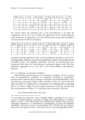
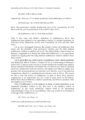
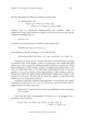
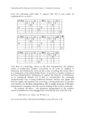
| OCR Text |
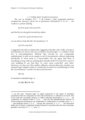
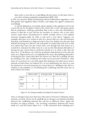
Show Chapter V. How Reason Causes Action 222 philosophy with a thoroughgoing analogy with science. However, because I take issue with Kant's much stronger claim that his moral theory is implied by rationality principles, my analysis of a fully effective intellect requires only that Kant's moral theory instantiate those principles; and so that a similar analysis be available to any developed normative moral theory that claims practical application. This in effect stipulates rationality criteria that any viable normative moral theory must meet. Following are some principles from what I call Theory K, in honor of its Kantian origins: (A) (1) If a rational being has the opportunity and desire to commit suicide, she refrains from it (G, Ak. 422, passim).21 (2) If a rational being makes a promise, he keeps it (G, Ak. 422, passim). (3) If a rational being has natural talents, she sometimes cultivates some of them (G, Ak. 423, passim). (4) When a rational being encounters individuals in need, he sometimes helps some of them (G, Ak. 423, passim). (B) (1) When a rational being is moved to act, she performs only those acts that can be willed as a universal law of nature (G, Ak. 402, passim). (2) When a rational being is moved to act, he performs only those actions consistent with treating humanity as an end in itself (G, Ak. 427, passim). (C) (1) When a rational being acts, she is motivated by respect for the moral law (G, Ak. 400, passim). (2) When a rational being resolves to act, his will makes universal law (G, Ak. 431, passim). (3) When a rational being resolves to act, she legislates autonomously for a kingdom of ends (G, Ak. 433, passim). (4) When rational being acts, he is noumenally free and phenomenally determined (G, Ak. 451, passim.22 One should not be misled by the singular subject of each of these propositions. But for ease of exposition, each occurrence of "a rational being" could be replaced by "any rational being." Hence each of these statements takes a universal quantifier. 22 Here and below I make an unargued assumption about the semantic equivalence of Kant's use of the terms "noumenal" and "intelligible" on the one hand, and 21 © Adrian Piper Research Archive Foundation Berlin |