| OCR Text |
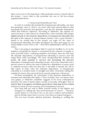
Show Rationality and the Structure of the Self, Volume II: A Kantian Conception 109 or something equally unilluminating in standard quantificational logic, similarly (T) becomes (4) (P.Q) R in standard sentential form, or (5) (∀g)(∃f)(∃h)(Pfg.Pgh Pfh) in standard quantificational logic. It is irritating not to be able to symbolize formally the logical inconsistency involved in (1) because this inability undermines the shared intuition that there is one. The natural response to this irritation - indeed, the standard move - is to insist on the distinction between normative decision-theoretic axiom systems and the descriptive empirical choice behavior that to varying degrees may or may not approximate them. By imposing decision-theoretic versions of certain axiomatic conditions derived from classical logic such as transitivity and asymmetry on the behavior of an ideally rational chooser, we exclude cyclical rankings from the scope of the normative system. However, denying the existence of a cyclical ranking within a normative decision-theoretic axiom system does not eliminate it in reality. Relative to that wider empirical reality, there is no detectable logical inconsistency between (C) and (T), hence none between the terms of (1). We see here a significant disanalogy between classical logic on the one hand, and formalized decision theory on the other. In a classical axiom system, imposing axiomatic conditions such as transitivity and asymmetry rules out logical contradiction in a way that explains and effectively predicts with 100% accuracy the corresponding absence of logical contradiction to be found anywhere in empirical reality. That is, the limits of logical possibility defined by the system mirror the limits of logical possibility found in reality. In a normative decision-theoretic axiom system, by contrast, imposing the decision-theoretic analogues of transitivity and asymmetry exclude cyclical rankings from the system without excluding them from the wider empirical reality in which that system is situated. Thus the standard move, of imposing decision-theoretic axioms in order to rule out cyclical "inconsistency," does not dissolve the irritation because normatively excluding the "inconsistency" a cyclical ranking represents does not eliminate it. The fact of the matter is that some subjects do exhibit cyclical selection behavior. Unlike a logical inconsistency, a cyclical ranking seems to remain a logical possibility relative to decision theory, despite the imposition of classical logic-like axioms that normatively exclude it. This fact by itself illuminates the background context of classical logic relative to which decision-theoretic axioms must be interpreted. What enables © Adrian Piper Research Archive Foundation Berlin |