| OCR Text |
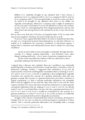
Show Rationality and the Structure of the Self, Volume II: A Kantian Conception 333 self-conception. This is the more common case of moral anomaly, in which our self-conception is overly generous in giving us the benefit of the doubt, and thereby provides pseudorational cover for doubtful behavior from which we benefit. However, a self-aggrandizing self-conception that is thus morally inflected significantly impedes the ability to evaluate external moral action performed by another that really is conceptually anomalous - i.e. anomalous not relative to one's own provincial self-conception, but instead relative to the criterion of third-person disinterested recognition proposed in Chapter VII.5 for identifying genuine conceptual enigmas. I refer, of course, to the genuine conceptual anomaly of truly altruistic moral action, in which the agent behaves virtuously not only when it is convenient or costs her nothing; but when she does so despite the fact that the costs are significant. The whistleblower cases discussed in Volume I, Chapter VI.5.2 and in this volume's Chapter VI.8 above would be paradigmatic examples. In Volume I, Chapter II.2.4 I argued that the Humean psychology of desire conditions the agent to perceive the jousting tournament of desiresatisfaction as a zero-sum game, in which my gain is your loss and vice versa. And in Chapter VII.4.1 above I argued that unlike literal self-preservation, which is the object of a highest-order disposition, a self-aggrandizing selfconception is the object of a desire - more specifically, the object of a futile desire to avoid the self-hatred I argued is endemic to the Humean self. Hence preservation of the rational coherence of a self-aggrandizing self-conception requires not only pseudorationality, but also, thereby, explicit devaluation of external moral anomaly that threatens it. Devaluation of whistle-blowers and other such moral anomalies is expressed in (among other things) disparagement, demonization, ostracism, rejection, ridicule, retaliation, and physical violence. The magnitude of devaluation is directly proportional to the threat to self-aggrandizement this moral anomaly represents. The magnitude of threat to self-aggrandizement is, in turn, inversely proportional to the success of the pseudorational mechanisms that attempt to buttress it - by denying, for example, the moral wrong the whistle-blower attempts to publicize; or dissociating him and his actions from the scope of one's legitimate moral community; or rationalizing them by ascribing to him selfinterested or opportunistic motives for whistle-blowing: greed, revenge, public attention, and career advancement being the usual suspects. Of course these pseudorational mechanisms also have more harmful, overt behavioral analogues: of denial in cover-ups; of dissociation in ostracism or excommunication or shunning; and of rationalization in doctored evidence or character assassination or attacks on the whistle-blower's credibility or legitimacy. These operations of pseudorationality are directed primarily at the whistle-blower himself; similar ones also may be directed at the moral wrong he attempts to right. © Adrian Piper Research Archive Foundation Berlin |