| OCR Text |
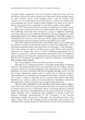
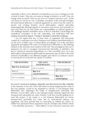
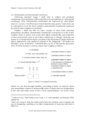
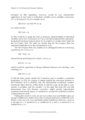
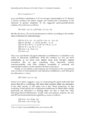
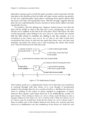
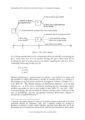
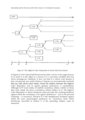
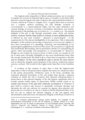
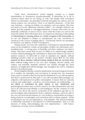
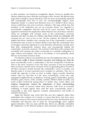
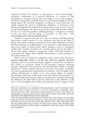
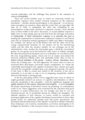
Show Rationality and the Structure of the Self, Volume II: A Kantian Conception 173 idea of the ex ante self as a controlling self and, hence, to the idea of his ex post self not being completely independent (RDC 160). In this case present, utility-maximizing rational deliberation engenders a rule that guides and regulates future choices, and shapes the agent's preferences accordingly. A second dimension of resolute choice speaks to the question of how the ex post self can be brought to observe the resolve the ex ante self makes, given that its preference ordering contradicts that of the ex ante self. McClennen's answer is that the ex post self has an incentive to observe the ex ante self's resolve under those circumstances in which resolute choice is the optimal outcome intrapersonally for both ex ante and ex post selves. Suppose, for example, that Irene at t1 wishes to diet at t3, knows that at t3 she will abandon that plan, and therefore is disposed at t1 to have her dentist wire her jaw shut instead. Knowing at t1 that at t3 she will prefer to respect her wish at t1 to diet at t3 rather than have her jaw wired shut, even though her first choice at t3 would be to abandon her diet, Irene at t1 can use the threatened alternative of having her jaw wired shut to motivate herself at t3 to stick to the diet she chose at t1. If she knows at t3 that her predicted abandonment of the diet she chose at t1 disposed her at t1 to implement the more discomfiting alternative of having her jaw wired shut, then she knows at t3 that she is getting off easy by sticking to her diet. Gratitude and relief can be powerful incentives. Thus Irene at t1 and Irene at t3 can both agree that sticking to her diet serves Irene's interests at both times: her interest at t1 in not abandoning her diet at t3, and her interest at t3 in not having her jaw wired shut at t1. Sticking to her diet is a solution to the problem of coordinating the conflicting interests Irene has at each of these two times: stick to diet wire jaw shut abandon diet Irene at t1 5 4 1 Irene at t3 3 1 5 Figure 6. An Intrapersonally Coordinated Resolute Chooser Thus in intrapersonal cases that have this kind of Prisoner's Dilemma choice structure, resolute choice can be spelled out as solving a coordination problem between the conflicting interests the self has at different times. Again the incentive for being resolute - for ensuring consistency between the choice made at t1 and the action taken at t3 - is the awareness that violating one's © Adrian Piper Research Archive Foundation Berlin |