| OCR Text |
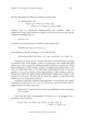
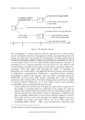
Show Chapter V. How Reason Causes Action 226 In the Critique of Pure Reason, Kant refers to a chain of deductive inferences like the sequence {(1), (2),..., n} as the "ascending [as opposed to the descending] series of syllogisms of reason" (1C, A 331/B 388), i.e. that series the members of which increase in generality and comprehensiveness relative to the particular facts (or "empirical conditions") with which it begins. About the ascending series Kant also claims that in order to generalize over such laws or premises to increasing degrees of abstraction, we have to assume a totality of such laws, and their termination in what Kant calls transcendental ideas of reason (1C, A 336/B393 - A 337/B 395; also cf. the section on "The Regulative Employment of the Ideas of Pure Reason"). Indeed, Kant thinks that we must assume such a unified theory in order to exercise our reason and understanding in the search for empirical truth at all (1C, A 651/B 679). This is the core idea of the requirement of vertical consistency developed in Chapter II. In the language of scientific theory, this would be to assume the internal coherence and completeness of the theory, and the termination of its higherlevel laws in the theoretical constructs24 of the theory and the principles governing it. The theory, in this parlance, is a conceptually higher-level hypothesis that is accepted as true because it successfully explains lowerlevel, law-governed uniformities as manifestations of "deeper" and (according to some) unobservable entities and processes that are themselves governed by theoretical laws and principles. Examples of such constructs from Theory K appear with increasing frequency as the level of abstraction of the principles increases: "Reason", "will", "law", "humanity", and "end" are theoretical constructs in (B), according to this description, as are "respect," "kingdom of ends," "freedom", and "noumena" in (C). All are abstractions that combine to form an ideal type25 whose behavior explains the uniformities of behavior of perfectly rational beings as described in (A). These theoretical constructs are, like scientific theoretical constructs, governed by two kinds of principles. First, there are internal principles that describe their behavior: The categorical imperative describes the operation of the rational will as legislating the moral law; Kant's account of the activity of reason in the Dialectic of the first Critique explains how the ideas of humanity as an end in itself and of the kingdom of ends function for us, and, together with the Groundwork, in what freedom, autonomy, and the noumenaMy choice of the term "construct" over "entity" should not be taken to imply a commitment to operationalism. I use it because it sounds ontologically peculiar to describe many of the higher-level concepts of Theory K, for example, "reason," "law," "humanity," "freedom," etc. as denoting entities. 25 in the sense that Weber defines in The Theory of Social and Economic Organization, Ed. Talcott Parsons (New York: Free Press, 1964), Chapter I.1 and I.2. 24 © Adrian Piper Research Archive Foundation Berlin |