| OCR Text |
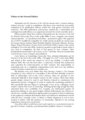
Show Chapter VII. Pseudorationality 290 expression of our attempt to save face before our humiliating intellective defeat at the hands of the real. On my account, pseudorationality comprises three mechanisms for coping with conceptual and theoretical anomaly that are implicit in classical logic: denial, dissociation, and rationalization respectively. Briefly, denial is a form of biased nonrecognition that degenerately satisfies the comprehensive requirement of rational intelligibility. Dissociation is a form of biased negation that degenerately satisfies the requirement of horizontal consistency. Rationalization is a form of biased predication that degenerately satisfies the requirement of vertical consistency. There are probably other pseudorational mechanisms besides denial, dissociation and rationalization. But I believe these three to be primary. In all three cases the bias is toward the appearance of rational coherence against the reality of theoretical insufficiency and so of thwarted literal self-preservation. And in all three cases the satisfaction of rationality requirements is degenerate because it relies on arbitrary and ad hoc improvisations that sacrifice the spirit to the letter of those requirements. All three mechanisms are interdependent and mutually supporting points on a continuum of theoretical irrationality, with denial at the pathological extreme and rationalization a merely elaborate demonstration of intellectual agility that nevertheless fails to wrestle with the facts. It is because these mechanisms preserve the appearance of unified selfhood and agency against the fact of disintegrity and the threat of disintegration that I refer to them as pseudorational mechanisms. Section 1 describes these three mechanisms in outline, and offers a brief example to illustrate how they function. Section 2 distinguishes between two kinds of cognitive anomaly identified by Kant that activate these mechanisms - conceptual anomaly and theoretical anomaly - and formulates the cognitive challenge that these present to our attempt to make both the world and ourselves rationally intelligible. This section also makes a further distinction that bisects this one, between first-person and third-person anomaly. Section 3 introduces a playful and frivolous test case of third-person conceptual anomaly, by way of dissecting the disruptive operations of denial on our attempts to integrate conceptual anomaly into a rationally intelligible perspective; and describes in detail some of the cognitive and psychological problems conceptual anomaly poses even under these relatively benign circumstances. In Section 4 I turn attention on theoretical anomaly, and offer a brief taxonomy of psychological characters - the naïf, the ideologue, the true skeptic, and the dogmatist - for some of whom pseudorational denial may usefully function. I argue that pseudorationality in response to theoretical anomaly bespeaks a personal investment in one's favored theory that places it at the service of desire-satisfaction. Section 5 focuses in more narrowly on the mechanism of denial in response to theoretical anomaly; and offers a criterion © Adrian Piper Research Archive Foundation Berlin |