| OCR Text |
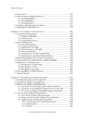
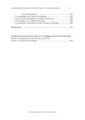
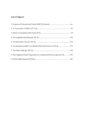
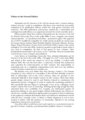
Show Rationality and the Structure of the Self, Volume II: A Kantian Conception 181 palpable absence, a reminder that is inconsistent with such support. So Phoebe at t3 must now choose as though she is carrying through on an earlier commitment to drive Timothy to the hospital, even if she earlier made no such commitment. For the even earlier commitment she did make was to be Timothy's friend. Resolute choice requires all of her behavior toward Timothy thereafter to be consistent with that. More generally, resolute choice requires that for any choice of x at tn, x satisfy the consistency criteria for a genuine preference listed in Chapter III relative to earlier relevant choices ("relevance" being defined by Chapter III.9's (VC) and (VCP)), even if the agent did not explicitly resolve at tn-m to so choose at tn. McClennen's model functions as a criterion of rationality relative to which all preferences, whether utilitymaximizing or not, are evaluated. Barring changes in circumstances or additional information, it enjoins the law-governed consistency in choice that a genuine preference requires. Above I offered some reasons for preferring my psychology of choice to McClennen's. So I did not mention two considerations in terms of which McClennen's is superior, when suitably decoupled from the issue of utilitymaximization. The first is that the thick concepts of commitment, resolve, regulation, and coordination that undergird McClennen's psychology of choice identify the model of resolute choice as the general law of which the rational necessity of promise-keeping is a special case. If a rational agent later honors earlier choice commitments, then in particular a rational agent later honors earlier choice commitments uttered performatively to another agent. That is, a resolute chooser by definition keeps his promises. Now promisekeeping is a special case of resolute choice in that it invites a more elaborate and complex social justification than that offered here. But the fact that keeping one's promises in particular is implied by choosing resolutely in general would claim a foundational role in any such justification. Thus despite his explicit resistance, McClennen's model does even more than "develop a ‘deontic' theory of resolute choice that would form the analogue to, say, a theory of morality in which the fact of having promised was taken as sufficient to establish an obligation (RDC 160, fn. 12 (285))." Resolute choice is not merely an analogue for such a theory of morality. It is at its foundation. Kant's argument for promise-keeping in Chapter I of the Groundwork offers a contrasting strategy of justification. He offers as a general criterion of rationality the concept of "bare conformity to law as such (without laying at its basis any law determined by particular actions11)" which, he says, "serves the will as its principle" (G, Ak. 402). I argue elsewhere that this criterion is merely a summary reformulation of the criteria of rationality Kant develops at length in The Critique of Pure Reason. He believes that from this criterion it is Incredibly, Paton translates <<ein auf gewisse Handlungen bestimmtes Gesetz>> as "any law prescribing particular actions." 11 © Adrian Piper Research Archive Foundation Berlin |