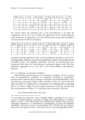
| OCR Text |
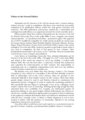
Show Chapter VII. Pseudorationality 308 his self-protectiveness toward it. That is, the dogmatist has not just a biologically fundamental disposition to render his experiences horizontally and vertically consistent over time, as the rational intelligibility of those experiences requires. In virtue of his personal investment in this favored theory, he has in addition a contingent but central desire to render his experiences horizontally and vertically consistent over time, relative to the requirements and constraints of his favored theory of those experiences. The more provincial his theory, the stronger this desire must be. Hence this analysis implies that the more provincial his theory, the more inflexible the preference for consistency that McClennen rightly dismissed as arbitrary. For these reasons, the requirements of horizontal and vertical consistency over time afford the dogmatist the option of two more subtle pseudorational strategies, in addition to blanket denial, for dealing with theoretical anomalies. And his natural disposition to satisfy these requirements, plus his personal investment in his favored theory, motivate him to exercise those strategies. From now on, in discussing these two further pseudorational strategies, I speak not just about the dogmatist, but also about us. This is not because I think anyone who is likely to read this discussion is purely and simply a dogmatist in the sense described. Obviously, the naïf, the ideologue, the true skeptic and the dogmatist are all equally caricatures, abstracted from more complex agents whose dispositions, ends and perspectives may change from moment to moment, and who are capable of exhibiting the characteristics of each. But I do think that anyone likely to read this discussion probably does have a favored theory of her experience, however nascent or inchoate; a theory in which she is, to varying degrees, personally invested. So I hope to be analyzing cognitive phenomena that all of us will recognize. 6. Dissociation as Biased Negation Our disposition to satisfy the requirement of horizontal consistency supplies us with the pseudorational strategy I call dissociation. Recall that horizontal consistency requires us to conceive all our experience at a given moment as mutually logically consistent, i.e. as satisfying the law of noncontradiction. Relative to a favored theory of that experience, this is to require, first, that the theory be horizontally consistent; and second, that all our experience be recognizable in the theory's terms - i.e. that they be vertically consistent. A theoretical anomaly is then by definition anything that defies recognition in these terms. This is one juncture that separates the dogmatist from the true skeptic. The true skeptic's tentative investment in his theory allows his greater detachment from it, in order more easily to rethink or revise it in order to accommodate what appears to be a theoretical anomaly. By contrast, the dogmatist's personal investment and selfidentification with her theory makes her reluctant to abdicate or modify it, and inclines her to construe her theory, and therefore the events and © Adrian Piper Research Archive Foundation Berlin |