| OCR Text |
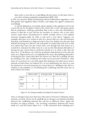
Show Chapter V. How Reason Causes Action 212 that other circumstantial factors - desires, emotions, habits, external conditions - do the heavy lifting; this is what Baron calls a "hybrid motive" (7; also see the excellent discussion at 151-156). Kant's specifically moral example is of the grocer who believes that prices should be fairly set, and does, indeed, charge his customers fairly - because this enables him to retain their business (G, Ak. 397). In this case self-interest provides the impetus to perform an action the agent may believe is worth performing anyway, but otherwise would lack sufficient personal incentive to perform. But Kant's distinction between acting from duty and acting merely in accordance with duty is a special case of a more general distinction that has broader, nonmoral application as well: between acting from reason and acting merely in accordance with reason. To act from reason would be to perform an act-token whose intentional content instantiates the rational content of the occurrent abstract thought or belief that precipitated it: (5) ∴ I will clean up this neighborhood. (5) expresses the intention behind an action that is governed, directed, and guided by reason. By contrast, an opportunistically effective intellect performs action whose intentional content does, indeed, instantiate the rational content of the agent's occurrent abstract thought or belief; but that was precipitated by an incentive other than the content of that occurrent abstract thought or belief. In that case, one acts merely in accordance with reason: I clean up the neighborhood as (3) requires, but only in order to avoid grading the stack of exams on my desk. Here I heed one set of rational principles, but only in order to avoid heeding a different one. Consider a second example. Lucille's occurrent abstract beliefs that (6) a rational agent obtains all essential nutrients; (7) certain essential nutrients are found only in broccoli; (8) ∴ a rational agent includes broccoli in her diet may have enough conative force to draw her attention, but by themselves not enough to move her to instantiate (8) in her own actions. However, the following conditions may provide the needed additional impetus: first, Lucille is hungry; and second, there is nothing else to eat. Having added broccoli to her diet under these unusual conditions, Lucille then may be able to cultivate the habit of eating broccoli on a measured, daily basis even in their absence. Even though her behavior then conforms to what reason requires, reason itself was parasitic on other incentives, motivating her only to use to her rational advantage the internal craving and external deprivation that precipitated her response. In this kind of case, the intellect uses contingent conditions © Adrian Piper Research Archive Foundation Berlin |