| OCR Text |
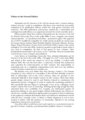
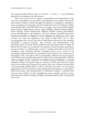
Show Chapter VIII. First-Person Anomaly 322 on him the exalted status of being holier than thou.2 So the self-deceiver is that particularly beleaguered brand of dogmatic pseudorationalizer for whom the mechanisms of pseudorationality must suffice to preserve not only the rational integrity, but also, therefore, the honorific status of his selfconception. 1.2. The Standard Analysis of Self-Deception Now one implication of the foregoing characterization of self-deception as a species of pseudorationality is that a certain familiar analysis of selfdeception, as the case in which one believes that not-P because one wants to, even though one knows in some sense that P, is inadequate to the psychological facts. Either we must continually vacillate between believing that P and believing that not-P, adjusting our current perspective, favored theory of our experience, and self-conception accordingly, in order to preserve horizontal and vertical consistency; or else our personal investment in believing that not-P leads us pseudorationally to deny, dissociate, or rationalize P, in order to maintain the belief that not-P. In that case, I would argue, it is not true that we also "in some sense" believe or know that P. For to have any such belief would presuppose the rational intelligibility of P that our pseudorational mechanisms are designed to obscure. The second implication of the foregoing analysis is that, even if we could be said to "in some sense" believe or know that P while believing not-P because we want to, as the standard analysis would have it, this analysis could not in any case provide a sufficient condition of self-deception. For according to this standard analysis, we would have to identify the cult member as self-deceived, which, as I have suggested, seems conceptually peculiar. In addition, one's desire to believe the falsehood not-P must be, specifically, a desire for self-aggrandizement, to which belief in the falsehood is a means. This is to argue that in addition to deception of the self by the self, self-deception also intrinsically involves deception about the self that deceives.3 Is there any pseudorationality recognizable as self-deception that does not involve self-aggrandizement? I doubt it, but remain open to persuasive counterexamples. Consider two kinds of case, nonpersonal and personal. First the nonpersonal case: Suppose I have a personal investment in the theory that 2 I doubt the difficulty of imagining alternatives to this way of thinking about oneself. For example, one might derive a great deal of self-esteem from being an academic, because one enjoys teaching and research, and believes one can make a valuable social contribution by engaging in them, without thereby supposing that academics, and so oneself, are any more important or valuable in the total scheme of things than janitors or secretaries or postal clerks. 3 Also see Amelie O. Rorty, "Belief and Self-Deception," Inquiry 28 (1972), 387-410. Rorty has since repudiated this view. © Adrian Piper Research Archive Foundation Berlin |