| OCR Text |
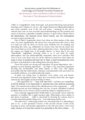
Show Rationality and the Structure of the Self, Volume II: A Kantian Conception 187 because the disposition to maximize utility or to preserve the internal unity of the self themselves may be biologically hard-wired. However, I do think he has shown both interpretations of resolute choice to be independent of "altruistic gene" accounts of biological hard wiring. And the foregoing sketch of the genesis of moral emotion suggests that McClennen has definitely shown resolute choice to be independent of involuntary socialization. But because resolute choice implies promise-keeping, and the disposition to promise-keeping can be instilled, in part, by the aversive effects of the painful moral emotions consequent upon breaking promises to oneself, McClennen has shown more than this. It is not only resolute choice that is engendered by deliberative rationality independent of involuntary socialization. Human morality itself can be deliberatively engendered in exactly the same way. McClennen's model of resolute choice, suitably decoupled from his insistence on utility-maximizing considerations, implies that human morality is much more closely entwined with deliberative rationality than most Humeans would agree. A close look at McClennen's model of resolute choice reveals him to be - like so many in the lineage of American Pragmatism - at heart a Kantian without the metaphysics. © Adrian Piper Research Archive Foundation Berlin |