| OCR Text |
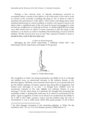
Show Chapter VIII. First-Person Anomaly 348 cases, rational recognition of the self - that is, self-awareness - sabotages its theoretically anomalous inclinational expression in action. Sometimes this seems a good thing, sometimes not. It is never the best thing. Strictly speaking, there can be no best-case scenario where political machinations are necessary in order to secure the exercise of basic rights, a just distribution of social and material resources, and fundamental self-respect. This is the environment that breeds conflict between moral principle and the needs and temptations of literal self-preservation - and so the multiple operations of pseudorationality. This is the non-ideal reality in which all of us are trapped. Still, we can imagine a different scenario - flawed in comparison to the morally integrated agent described in Chapter VI.7.3, but an improvement on the pseudorational shambles we try to piece together most of the time nevertheless. In this alternative scenario, the requirement of rational intelligibility functions not as a barricade against our unethical inclinations but rather as a fine-grained filter of them. Appropriately subtle and detailed conceptualization of our diverse emotions, impulses, and desires, deeply embedded in the structure of the self, makes psychologically harder the nonrecognition and ignorance of the self on which first-person moral anomaly feeds. Our highest-order disposition to literal self-preservation creates and reinforces a coherent and nuanced network of moral concepts and principles that strengthen and extend the capacity for self-criticism, and so discourage the unethical corruptions of power. In this scenario, rational analysis does the legwork of strengthening the interconnections and distinctions among moral concepts, and of disseminating these into general use through dialogue. Similarly, in this alternative scenario, the requirements of horizontal and vertical consistency over time function not as an inhibitor of our intuitive talents, but rather as a welcoming structural support for them. This same finegrained, deeply embedded network of concepts and principles identifies and alerts us to inchoate creative impulses, and enhances our receptivity to them. Practical experience then does the legwork of demanding and refining our attention to the nuances and singularities of particular subjects, objects, and states of awareness, in ways that in turn refine our grasp of them. The resulting self-conceptualization sharpens our awareness not only of form and idea, but also of the physical subtleties of pincha mayurasana as we are experiencing them. This augments rather than undermines our mastery of it. Thus the discipline of thought exerts pressure on the formation of the self through the cognitive discriminations of reason, while the disciplines of practice exert it through the perceptual discriminations of the concrete particulars reason subsumes. Theory and practice mutually reinforce the extension of practice into new, challenging and unfamiliar domains of particularity, and the extension of theory into new, challenging and unfamiliar domains of abstraction. © Adrian Piper Research Archive Foundation Berlin |