| OCR Text |
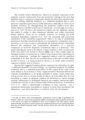
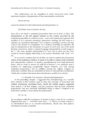
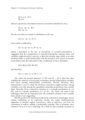
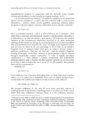
Show Rationality and the Structure of the Self, Volume II: A Kantian Conception 95 to make a judgment, e.g. "That is a football." But my point is that the recognition of the thing is a necessary condition of making the judgment, not identical to it. If I could not first ponder the application of the indexical concept of thatness, and envision to myself a football hurtling through the air, I could not learn to make the propositional judgment at all. And I submit that although the intentional object of the attitude expressed in the following sentential proposition (19) I envision a football hurtling through the air is perfectly intelligible to us, there is no sentential reduction of the constituent, "a football hurtling through the air," that makes it so. So far I have argued that the requirements of horizontal and vertical consistency are implied by the holistic regress, and that the holistic regress, in turn, is implied by the requirement of rational intelligibility. The further implication of this argument is that if we are successfully to make coherent sense of things, even in the most minimal way, we must, in conceiving those things, satisfy the law of noncontradiction in the ways the requirements of horizontal and vertical consistency specify. This is the sense in which, I want to claim, the minimal consistency requirements of theoretical reason apply not just to sentential propositions, but also, and more fundamentally, to those concepts of their constituents that form both an agent's perspective, and so her self. But if the concepts that constitute an agent's perspective, whatever they are, must satisfy the requirements of horizontal and vertical consistency in order that the world be minimally rationally intelligible to her, then whether an agent is theoretically rational or not cannot depend upon contingent factors, such as training or personality, that some normal human agents have and others lack. An agent who is not theoretically rational in the minimal sense to which the requirements of horizontal and vertical consistency commit us cannot make sense of the world at all. Now it might be objected that I have made my point only by changing the subject; and that this minimal sense of "theoretically rational" is not the one we ordinarily have in mind when we ask whether or not an agent is theoretically rational, and in virtue of what characteristics he is or is not. But the requirements of horizontal and vertical consistency are, in essence, the same rationality requirements we ordinarily do have in mind when we ask these questions, namely the requirements of logical consistency. Since any sentential proposition itself can be embedded in another one as a constituent, the requirements of horizontal and vertical consistency can be applied as well to sentential propositions and strings of such propositions, to yield the familiar canons of theoretically rational inference to be found in any logic textbook: Sentential propositions that satisfy the requirement of horizontal consistency thereby satisfy the requirements of sentential logic, and sentential © Adrian Piper Research Archive Foundation Berlin |