| OCR Text |
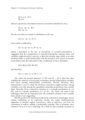
Show Rationality and the Structure of the Self, Volume II: A Kantian Conception 147 a compound sentence can be fully extensional if it includes an intensional subsentential constituent: Could the arithmetical sentence (13) 2 + 2 = 4 be fully extensional if, for the first conjunct, we substituted the constituent sentence, "Piper is indifferent between 2 and 1+1"? Is the resulting sentence, (14) (Piper is indifferent between 2 and 1+1) + 2 = 4 extensional? I think not. But we need not resolve the question here. For present purposes it is enough to have shown how an occasional truth table for subsentential constituents can expose the intensionality of the intuitive notion, and to note that these questions, about the purported extensionality of the complex sentences that depend on it, can be raised. QUESTION 3. DOES THIS ANSWER TO QUESTION 2 MAKE INDIFFERENCE AN EQUIVALENCE RELATION? That is, does the fact that on either interpretation of indifference, the fully defined indifference relation satisfies all three conditions - Symmetry, Irreflexivity, and Transitivity - suffice to identify indifference as an equivalence relation? In case you are not convinced by the foregoing considerations, the same counterarguments to Ramsey offered in Volume I, Chapter IV.2.2 also apply here, and militate against a positive answer to this question. To say that I am indifferent between two choice alternatives x and y is to say that x and y occupy the same position in my preference ranking; that either one will do. By contrast, to say that x and y are equivalent is to say that x is a necessary and sufficient condition for y. It is to say first that if x is a choice alternative then y is also one; and that if y is a choice alternative then x is also one. It is to say that x is a choice alternative if and only if y is. However, that two choice alternatives occupy the same position in my preference ranking neither implies nor suggests any such relations of logical necessity between them. So the answer to this question is no: Satisfaction of Symmetry, Irreflexivity, and Transitivity does not suffice to make indifference an equivalence relation. QUESTION 4. DOES THIS SHOW THE IMPOSSIBILITY OF MOVING FROM NONQUANTITATIVE ORDERING CONDITIONS ON PREFERENCE RANKINGS TO QUANTITATIVE FUNCTIONS THAT REPRESENT THOSE RANKINGS CARDINALLY AND PROBABILISTICALLY? © Adrian Piper Research Archive Foundation Berlin |