| OCR Text |
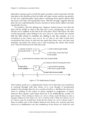
Show Chapter III. The Concept of a Genuine Preference 120 Rather, she prefers chocolate to vanilla and coffee on grounds of sweetness, and coffee to vanilla and chocolate on grounds of texture. Nor can the apparent inconsistency in Gertrude's ranking be described in conventional propositional terms, even had the derivation in Section 1.(6) - (14) gone through for ordinary cyclical inconsistency. For from substituting (2), above, for 1.(10) in Section 1, the derivation of (3) Gertrude prefers chocolate and it is not the case that Gertrude prefers chocolate and Gertrude prefers coffee and it is not the case that Gertrude prefers coffee and Gertrude prefers vanilla and it is not the case that Gertrude prefers vanilla does not accurately describe Gertrude's intentional state. There is no suggestion in the description of the case that Gertrude stops preferring chocolate for its sweetness, vanilla for its taste, and coffee for its texture. She continues to prefer each flavor of ice cream for one of its properties, and also something that is not that flavor for a different property. The apparent cyclicity of Gertrude's preference ranking arises out of her failure to rank independently the relevant properties themselves - sweetness, taste, and texture - of the alternatives she confronts. Neither Savage's nor Sen's notation enables us to do that. I suggest a way to do it in Section 8, below. We may not be able to capture the myriad subtleties of each and every different chooser's preference rankings. But we do not want to beg any questions about what those subtleties are, as ">" does. So if we want to bring out the logical structure of (T), the streamlined elegance of ">", "≤", and "≥" may need to be sacrificed. 3. Notational Desiderata for Preference Alternatives Savage chose not to symbolize (T) and (C) within the standard constraints of quantificational logic. However, its notation is adequate for the expression of other relational predicates of an intensional nature. If (1) Everyone loves something can be expressed as (2) (∀w)(∃x)Fwx, then (3) Everyone prefers some alternative can be expressed as © Adrian Piper Research Archive Foundation Berlin |