| OCR Text |
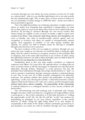
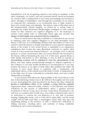
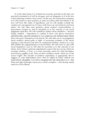
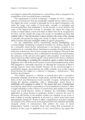
Show Rationality and the Structure of the Self, Volume II: A Kantian Conception 339 not that important, or that no serious harm was done by breaking it, or that it wasn't a real promise because we secretly kept our fingers crossed. In this case, as in rationalization, we invoke a self-aggrandizing justification for why the moral principle that prima facie seems to apply in point of fact does not, which dissociates our morally anomalous action from the realm of morally significant behavior. In this second kind of case, the self-aggrandizing principle is that the broken promise is of no consequence; it is not important enough to count as a real violation of promise-keeping. The mechanism of dissociation functions by identifying something in terms of the negation of the concepts that substantively articulate our theory - in this case, our metaethical theory about the scope of application of our normative moral principles. As Kant describes the situation, we evade the application of principle to our own promisebreaking behavior, by stripping that behavior of its status as a violation of principle - by highlighting its just-this-once spatiotemporal discreteness and its not-this-principle exceptionality. Essentially we assure ourselves that our behavior does not violate the moral principle because it is not subsumable by that principle in the first place; because it is too concrete and particularized - too unusually one-of-a-kind - to instantiate it. In this case, too, the behavior is theoretically anomalous relative to our self-aggrandizing self-conception, regardless of how often we engage in it; and we pseudorationalize it by dissociating it from the scope of moral judgment. 4.3. Aristotle, Kant and Nietzsche on Denial Although Kant's account of denial, the pseudorational mechanism that deviates the furthest from full rational intelligibility, is the most extensive I have found, he is by no means the only philosopher to weigh in on it. Aristotle in the Nicomachean Ethics tells us that the cause of involuntary action is not [this] ignorance in the decision, which causes vice; it is not [in other words] ignorance of the universal, since that is a cause for blame. Rather, the cause is ignorance of the particulars which the action consists in and is concerned with; for these allow both pity and pardon, since an agent acts involuntarily if he is ignorant of one of these particulars (1110b31).9 Now Aristotle probably has in mind the following kind of case. Believing I am mixing cornstarch into the gravy to serve my dinner guests, I unknowingly lace the gravy with rat poison and kill them all. Or, alternately, the kind of case in which, meaning to dust the furniture with a hand mop, I inadvertently pick up the cat, spray it with Lemon Pledge, and proceed vigorously to wipe various surfaces with it, thereby smothering the cat in dust and Lemon Pledge by accident. In both cases my ignorance of important particulars about my 9 Aristotle, Nicomachean Ethics, trans. Terence Irwin (Indianapolis: Hackett, 1985). © Adrian Piper Research Archive Foundation Berlin |