| OCR Text |
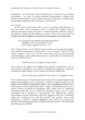
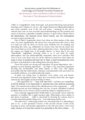
Show Chapter XI. Xenophobia and Moral Anomaly 446 (B) (1) agent A has primary disvalued property P; (2) agent A has n-ary property N; and (3") N, in the way in which it is borne by A, is of negative value, plus the following stipulation (4) For the higher-order political discriminator, A's possession of P is what in fact confers negative value on N as characteristic of the typical, i.e. scrupulous higher-order political discriminator. What makes higher-order political discriminators so scrupulous? What, that is, explains the higher-order political discriminator's tendency to suppress (B.4)? Part of the answer lies in the nature of first-order political discrimination. As we have seen, first-order political discrimination can be understood as a species of pseudorationality that relies heavily on the mechanisms of rationalization and dissociation. The perception of someone's race, gender, class, sexual orientation, ethnic or religious affiliation, etc. as a source of his disvalue or value is the consequence of applying value concepts like "person," "human being," "citizen," "member of the community," "rational and responsible agent," etc. too narrowly, to include only those individuals who have the primary valued property, and exclude those individuals who lack it. And similarly, dissociating Jews as subhuman, blacks as childlike, gays as perverts, working class people as animals, or women as irrational are ways of obscuring one's identification of these individuals as fully mature, responsible human beings, and thereby obscuring one's recognition of these individuals as full members of the community with which one identifies.5 The irony in the case of racism is that there is a substantial literature in biology and the social sciences that indicates that almost all purportedly white Americans have between five and eighty percent black ancestry - hence are, according this country's entrenched "just one trace" convention of racial classification, black. For only a very small selection of the research that has emerged on this topic, see F. James Davis, Who Is Black? (University Park: Pennsylvania State University Press, 1991); Virginia R. Dominguez, White By Definition: Social Classification in Creole Louisiana (New Brunswick: Rutgers University Press, 1986); Joel Williamson, A New People (New York: Free Press, 1980); L. L. Cavalli-Sforza and W. F. Bodmer, The Genetics of Human Populations (San Francisco: W. H. Freeman and Co., 1971), pp. 490-499; T. E. Reed, "Caucasion Genes in American Negroes," Science 165 (1969), 762-768; P. L. Workman, B. S. Blumberg and A. J. Cooper, "Selection, Gene Migration and Polymorphic Stability in a U. S. White and Negro Population," American Journal of Human Genetics 15, 4 (1963), 429-437; Bentley Glass and C. C. Li, "The Dynamics of Racial Admixture - An Analysis of the American Negro," American Journal of Human Genetics 5 (1953), 1-20; and in general, Genetic Abstracts from about 1950. For these references and discussion on this matter I am indebted to Professor Monro S. Edmonson of Tulane University's Department of Anthropology. The 5 © Adrian Piper Research Archive Foundation Berlin |