| OCR Text |
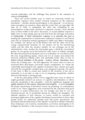
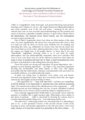
Show Rationality and the Structure of the Self, Volume II: A Kantian Conception 75 in attitudes towards intentional objects formulable in such sentential terms. If they did, Kant's synthetic function would have nothing to do. To learn to objectify and transform nonsentential intentional objects into sentential form is part of the process by which we first come to recognize 12 reality as independent of and external to our selves. Freud thought that all such agent-dependent nonsentential intentional objects were in some way constitutive of an agent's self; thus the importance to psychoanalysis of free association, slips of the tongue, and so on. I make only the weaker claim that some such objects have this function. These are the ones that most strongly resist public scrutiny in an impersonal idiom. Excluding these by definition or fiat from the scope of intentionality leaves us with an unnecessarily impoverished representation of an agent's ordinary mental life. If nonsentential intentional objects that are psychologically fundamental to an agent's selfhood also may enter into the construction of sentential intentional objects, then they are among the constituents of sentential propositions agents can conceive whether or not these propositions themselves contain intentional operators. This is my second, converse proposal: Proposal 2: Anything that may function as a nonsentential intentional object may occupy the subject or predicate position in a sentential proposition that contains no intentional operator. So, for example, "the situation in Africa" can function as a constituent in (11) The situation in Africa is intolerable as well as it can in (8); "the number 3" can function as a constituent in (12) The number 3 has religious significance in many cultures as well as it can in (7). But of course as Brandom and others have shown, sentential propositions themselves may function as constituents in more complex sentential propositions, whether the latter express intentional attitudes or not. 12 See Ernest G. Schachtel, "On Memory and Childhood Amnesia," Psychiatry 10 (1947), 1-26; and Ulric Neisser, "Cultural and Cognitive Discontinuity," in T. E. Gladwin and W. Sturtevant, Eds., Anthropology and Human Behavior (Washington, D. C.: Anthropological Society of Washington, 1962). © Adrian Piper Research Archive Foundation Berlin |