| OCR Text |
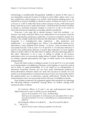
Show Chapter III. The Concept of a Genuine Preference 150 consequent failure to remember all three alternatives simultaneously. It thus depends on a failure to satisfy conditions (2. a) and (2. b) of being a conscious and intentional chooser. A few further words about (T3). If we were to violate the No-Trespass Rule, the two sets of bracketed individual variables conjoined in (T3)'s antecedent would be interpretable as containing a contradiction, and therefore (T3) would be what we might call a bad tautology. But violating the NoTrespass Rule would open precisely the Pandora's box of problems about the intensional opacity of P the rule itself is designed to eliminate (more on this in Section 10, below). Furthermore, violating the rule would produce the kind of flatfooted interpretation of preference - such that w would be guilty of the intertemporal logical inconsistency of preferring y least at t1 and most at t2 simpliciter - that is foreclosed by my earlier formulation of (P) in Section 5, above. By contrast, observation of the No-Trespass Rule for (P) solves these two problems. It embeds the two interconnected concepts of a conscious and intentional chooser and a genuine preference in such a way as to require that w's preference ranking of y over z at t2 be intertemporally logically consistent with her ranking of x over y at t1, i.e. such that Pw(x.~z) is true by implication. This is part of what it means to describe (T3) as a conceptual truth. P's intensional opacity requires observation of the No-Trespass rule. But this has the felicitous side-effect of eliminating bad tautologies in the subsentential structure of (T3). So observing this rule means that no such inferences over all of the variables together contained in the conjunction of (T 3)'s antecedent is permissible. Then (T3)'s subsentential application of logical connectives merely displays the structure of transitive preference over pairwise comparisons, without permitting any further logical inferences over their individual variables across multiple occurrence of P. However, we do not need to be able to perform any such inferences across the individual variables contained in (T3) independent of the sentential P-functions in which they are contained. Nor do we need to verify (T3) as a truth of logic. All we need (T3) to be is consistent, and all we need to be able to do is give its variables x, y and z an ordinal ranking on a utility scale. But a conscious and intentional chooser's memory of the relation of x to y while she is ranking y over z is what enables her simultaneously to form and apply the concept of x's ranking superiority both to y and to z; of z's ranking inferiority both to y and to x; and thereby to infer from her selection behavior at t1 and t2 that she prefers x to z. Together with (Con), above, it therefore enables her to weakly order x, y and z relative to one another on a utility scale. So I think the right response to the dire consequences described above of violating the NoTrespass Rule in (T3) is to just not violate the rule. We will see shortly that this advice has no untoward implications for our answers to questions (i) or (ii) of Section 3. © Adrian Piper Research Archive Foundation Berlin |