| OCR Text |
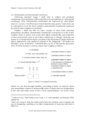
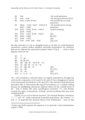
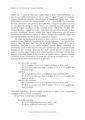
Show Chapter IV. McClennen on Resolute Choice 176 In the variable term calculus notation proposed in the preceding chapter, (Ct)) becomes Chapter III.9's (C') Pw(x.~y).Pw(y.~z).Pw(z.~x) There I argued that the solution to the problem of cyclical choice is to require that an agent such as Dennis choose only on the basis of his genuine preferences. To act on one's genuine preferences is to act resolutely in McClennen's sense: to preserve the transitivity, among other things, of one's preference orderings. In Volume I, Chapter IV.2 - 3, I defended the claim that preserving transitivity is not the same as maximizing utility in the nonvacuous sense. In this volume's Chapter III and again here I extend this claim further: transitively consistent behavior can be justified even when it does not maximize utility in the nonvacuous sense. The requirement that one act only on one's genuine preferences speaks to both of the utility-maximizing situations McClennen targets as justifying resolute choice. Consider the first. Suppose utility is not maximized when the later self follows through on the earlier self's resolve. Suppose instead that there is a considerable cost to so doing: Phoebe resolves at t1 to drive her sick friend Timothy to the hospital at t3, but at t3 is inclined to choose the overall less costly alternative of paying a limousine service to do so instead, even though nothing in the situation has changed and there is no new information. Is there any other reason for Phoebe to nevertheless follow through on her original resolve despite its cost? The concept of a genuine preference provides one. As we have seen in Chapter III, the very fact that acting on her original resolves maintains the horizontal and vertical consistency of Phoebe's experience over time and at each moment is itself a reason. That is, preserving a unified and internally coherent self is a good that justifies Phoebe's resolve even though that unified self fails to maximize utility on this occasion. Now McClennen describes and rightly dismisses a superficially similar case, in which one simply "might be the sort of person who values choosing in a manner that is consistent with earlier choices made (PRR 239, fn. 44);" someone who "simply ha[s] a preference for acting subject to the constraints of such rules (PRR 215)." In this case preserving transitivity through time would maximize utility. However, McClennen is right to reject this possibility as ad hoc, since whether one has such a preference or not will depend on arbitrary and idiosyncratic factors that do not require any special kind of motivation of the sort resoluteness provides. My claim, that preserving the internal unity and coherence of the self over time and at each moment justifies resolute choice independently of utility-maximization, is a different one. My Optimistically, I assume my demonstration in Chapter III.6.2.1 above, that transitivity and acylicity are logically equivalent, to be dispositive of any such issues. © Adrian Piper Research Archive Foundation Berlin |