| OCR Text |
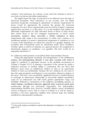
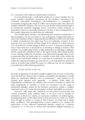
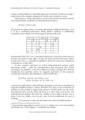
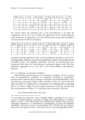
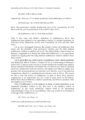
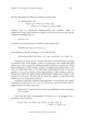
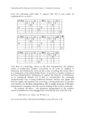
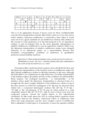
Show Rationality and the Structure of the Self, Volume II: A Kantian Conception 125 This substructure can be unpacked in terms borrowed from truthfunctional analysis. Interpretation of the subsentential constituent (4) not stir-fry cannot be identical to the truth-functional interpretation of (5) Gladys does not prefer stir-fry, since (4) is not itself a sentential proposition that can be true or false. The interpretation of (4) will depend instead on the context provided by the sentential proposition in which it occurs - and on the intentional operator that modifies it. In a sentence asserting a preference ranking, (4) will count as a rejection of a proffered alternative. In a sentence asserting a resolve, (4) may count as the denial of a temptation. In a sentence asserting an intention, (4) may be interpreted as the disclaimer of a goal. In each case, use of the usual Boolean connectives under a natural language interpretation would assign to the "~" the same familiar interpretation of "not"; but in each case the "not" would be nested slightly differently in its context. Similarly with "and", "or", etc. So we need a notation that can do this. In order to capture the intensional nature of the preference relation, it needs to be able to express both sentential and subsentential relations in familiar quantificational and truth-functional terms. And in order to answer (i) and (ii) of Section 3, we similarly need a notation for expressing recognizably logical relations, not only among sentential propositions, but in addition among the objects assigned to individual variables that are embedded in them as subsentential constituents. I shall call a notation that meets these desiderata a variable term calculus. 5. A Variable Term Calculus: Subsentential Applications In the preceding chapter, I suggested the underpinnings of a variable term calculus in the notation used to limn the concepts of horizontal and vertical consistency developed there. Recall the holistic regress argument from Section 3 of that chapter, and its conclusion that not just sentential propositions, but any rationally intelligible thing or object t assigned to an individual variable a must satisfy the requirement (1) ~(a.~a) (in accordance with the conclusions of Section 4 above, read (1) as a sentence fragment that says: "… not both a and not-a …."). That is, we must conceive t as self-identical and so as nonself-contradictory. Recall also that Quine's schematized axioms of identity © Adrian Piper Research Archive Foundation Berlin |