| OCR Text |
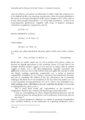
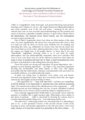
Show Chapter III. The Concept of a Genuine Preference 130 Excluded by this stipulation, however, would be any subsentential application of such rules to individual variables across multiple occurrences of P or its instances. So, for example, from (20) Pw(x.~y).Pw[(x~z) v y] we could not infer (21) Pw(x.~z), for this would be to apply the rules of inference subsententially to individual variables across two occurrences of P in a way that trespassed the outermostbracketed boundaries between them. So it would be to violate what I shall call the No-Trespass Rule. We shall see shortly that the No-Trespass Rule has important implications for the reformulation of (T). The No-Trespass Rule also enables us to distinguish between not having a preference for x over y, i.e. (22) ~Pw(x.~y), and positively preferring not to select x over y, i.e. (23) Pw ~(x.~y), which would be equivalent to being indifferent between not selecting x and selecting y, i.e. (24) Pw(~x v y). In (22) the tilda stands outside the P-function, and so modifies a sentential proposition. In (23), by contrast, it stands outside the outermost brackets of the P-function and so modifies only the subsentential constituent complex intentional object that lies within them. In (24) the scope of the tilda is even smaller: it modifies only the variable x to the right. But both (23) and (24) demonstrate how this Boolean connective might modify subsentential constituent intentional objects of a preference, not just the sentential assertion of that preference itself. Putting this much to work, we can now reduce Luce and Raiffa's gloss on Savage's indifference relation (I) to what I call pure Epicurean indifference (I1). Where x and y are acts, Luce and Raiffa define indifference between x and y (á la Savage) as: x is preferred to or indifferent to y and y is preferred to or indifferent to x, i.e. © Adrian Piper Research Archive Foundation Berlin |