| OCR Text |
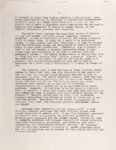
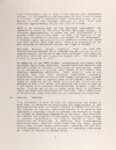
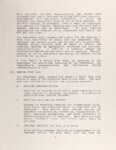
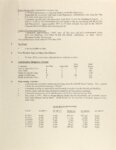
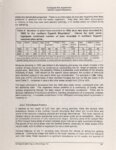
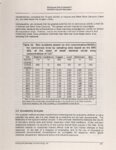
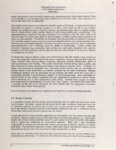
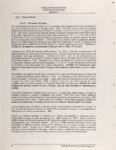
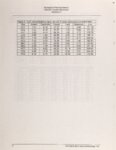
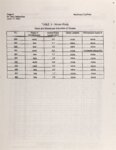
Show Ecological Risk Assessment Northern Oquirrh Mountains Appendix 2 Smith et at. (1988) conducted a study on the effects of Se (as selenomethionine) on reproduction in black-crowned night-herons (Nycticorax nycticorax). Diets containing 10 ppm Se were not found to affect night-heron reproduction, but 30 ppm produced a reduction in. body weight. Screech owls (Otus asio) also did not experience reproductive impairment at 10 ppm Se as selenomethinine (Wiemeyer, unpublished data). Consequently, the avian carnivore NOAEL for Se was set at 10 ppm and a LOAEL at 30 ppm. 2.8.1.3 Wild Mammals Clark et al. (1989) reported elevated tissue concentrations of an order of magnitude in raccoons from the contaminated drainwater ponds in California as compared to nearby reference sites but no evidence of negative effects on general appearance, physiological parameters, reproductive organs, or age structure of the population. They estimated that the raccoons fed on bulrush tubers and rhizomes with a mean Se concentration of 170 ppm (dry weight) and on voles with a mean whole body concentration of 3.1 ppm (dry weight). Similarly, Clark (1987) found no discernible adverse physiological or population effects in the California voles (Microtus califomicus) from the contaminated area, although they had tissue Se concentrations 500 times higher than animals from a nearby reference site and stomach contents had Se concentrations of 0.8 to 3.4 ppm. Clark (1987) also saw no effects in the following herbivorous mammals: house mice (Mus musculus) (stomach contents: 0.14 to 8.9 ppm) Western harvest mouse (Reithrodontomys megalotis) (stomach contents: 1.5 to 6.7 ppm), the ornate shrew (Sorex omatus) (stomach contents: 28 to 140 ppm), muskrat (Ondatra zibethicus; stomach contents: 2.6 to 42 ppm), Califomia ground squirrel (Spermophilus beecheyi; stomach contents: 0.06 to 2.4 ppm), desert cottontail (Sylvilagus audubonii), and the deer mouse (Peromyscus maniculatus). Likewise the ornate shrew (Sorex ornatus) showed no effects with stomach contents containing 28 to 140 ppm Se (Clark, 1987). Therefore, a NOAEL for wild terrestrial herbivorous mammals is at least 42 ppm and for insectivorous mammals possibly 140 ppm, well above the level where reproductive effects have been seen in domestic mammals. saw 2.8.2 Table 11. . Proposed Toxicity Thresholds Proposed Maximum Tolerable Concentration (NOAEL) Thresholds (LOAEL) for Selenium (ppm d.w.) and Effects No Observable Adverse Lowest Observable Adverse Effect Level Effect Level (NOAEU (LOAEL) 4 5 Carnivorous birds 10 30 Ruminants 4 10 Other herbivorous mammals 4.8 6.4 Herbivorous birds Insectivorous birds Insectivorous mammals 140 Carnivorous mammals ? 7.2 Invertebrates Values for acute toxicity from selenium were taken from Osweiler et al. (1985) and NRC (1980). ecological planning and toxicology, inc. 21 |