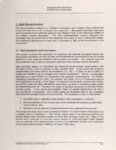
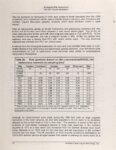
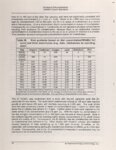
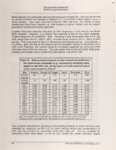
| OCR Text |
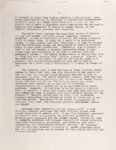
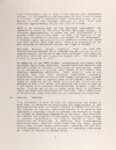
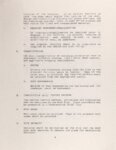
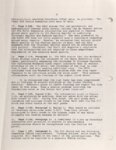
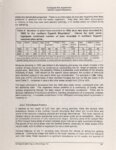
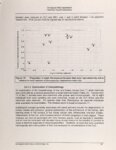
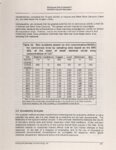
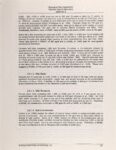
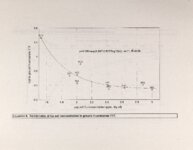
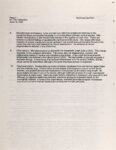
Show Ecological Risk Assessment Northern Oquirrh Mountains 1-------------------------------------------------- 120 . .... I y -6.96+(10.17;t1.97)*x, N=11, R2=O.75, p<0.001 I = "0 100 KC-1 :::s o Q. 80 fI) :::s o fI) E 60 o e, '0 .8 z PC-;k' 40 ,FC1.···0 flC.2· .>"0' ...... 0 20 BR-1 00 o -20 ..____,.,c;_ _ 4 o -2 6 8 10 12 Selenium concentration in diet (ppm, dry wt) Figure 23. Number of Peromyscus captured on each sampling site as a function of estimated Se concentration in their diet (ppm). It also was assumed that if CoC concentrations in the bodies of small mammals (Le., body burdens) were high enough to affect survival or reproduction, these concentrations would When a be inversely related to the numbers of animals captured per sampling site. was conducted the of number comparing regression analysis Peromyscus captured per sampling site to the mean whole body CoC concentration in Peromyscus, a multiple linear regression model was calculated that explained 95% of the variation in the dataset: No. Captured = -31.1 + (2.24±O.23)(Cu) + (53.51±10.75)(Cd) (4.46±1.29)(Pb), N 0.95, where the independent variables represent the mean whole body 11, R2 concentration for each CoC at each samplings site. - = = significant variable in the equation was the whole body Cu concentration, compared to 13% and 9% for Cd and Pb, respectively. the equation suggests that the number of animals captured is positively Although influenced by the body burden of Cu and Cd, a more realistic interpretation is that the concentrations of Cu and Cd measured in the bodies of Peromyscus are not affecting their survival or reproduction and the animals are responding to other environmental variables such as habitat suitability and food source. The most explaining 73% of the variation, There was no significant relationship between the measured whole body concentrations of CoC in Peromyscus and the rates of reproductive activity among adult Peromyscus. However, this relationship is affected by the small number of adult females captured at ecological planning and toxicology, inc. 69 |