| OCR Text |
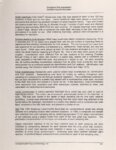
Show - Ecological Risk Assessment North Oquirrh Mountains Appendix 2 animals are relatively insensitive to this effect. Koller et al. (1986) exposed rats to 0.5, 2.0, or 5.0 ppm Se without causing any measurable effect on the immune response. Fairbrother and Fowles (1990) exposed groups of eight mallards to 0.5 or 3.5 ppm sodium selenite or 2.2 ppm selenomethionine in water for 80 days and measured several indices of immune function and Selenium as sodium selenite had no effect on any of the measured physioloqtcal Selenomethionine decreased the ducks' ability to mount a nonspecific primary immune Fairbrother et al. (1994) measured similar immune function and physiological response. general health. indices. parameters in avocet chicks raised from eggs collected at two contaminated ponds (12 ppb and 45ppb Se, respectively) in the San Joaquin Valley and compared the results to chicks from eggs collected from a reference pond (1.2 ppb Se). An increased heterophil to lymphocyte ratio was measured in birds from the 12 ppb pond, but the results may have been confounded by a concomitant relatively high level of As in the water. These data do not change any of the estimated NOAE:L or LOAEL values listed in Table 22 (Section 4.1.2.9.2). 2.8.1.2 Wild Birds Wildlife impacts from Se exposure became a concem in the mid to late 1980's due to leaching of Large areas of irrigated farmland were tiled and drained into wastewater evaporation ponds created in historical marshland areas of the valley. The soils in the area were naturally high in Se, that was leached out oy the irrigation practices and consequently accumulated in the drainage ponds up to 300 ppb while nearby natural wetlands and streams contained less than 2 ppb (Schuler et aI, 1990). The presence of large, shallow ponds wi,th abundant aquatic vegetation and invertebrates attracted waterfowl and shorebirds with subsequent problems of embryo malformations and reduced hatchability (Hoffman et al., 1988; Ohlendorf, 1989; Ohlendorf et al., 1986a, b, 1987; 1988; Ohlendorf and Skorupa, 1989; Skorupa and Ohlendorf, 1991; Schuler et al., 1990). These impacts to the wildlife in the San Joaquin Valley were due to bioaccumulation of the compound through the aquatic food chain. A value of 1 ppb Se in the water is generally agreed to be a NOAEL for aquatic birds with effects beginning at a LOAEL of 2 ppb (Peterson and Nebeker, 1992; Lemly and Smith, 1987; Ohlendorf et al., 1993). Se from the soil in the San Joaquin Valley, California from irrigation practices. Heinz et a/. (1987) studied the effects of Se on mallard reproduction. Adult birds were fed diets containing 1, 5, 10, 25, or 100 ppm Se as sodium selenite or a diet containing 1 ° ppm as seleno DL-methionine. There were no effects on weight or survival of adult birds at the 1, 5, or 1 ° ppm Se groups while these parameters were decreased in the other treatment groups. Females fed 25 ppm Se took longer to begin laying eggs and intervals between eggs were longer. Hatching success and hatch weight were reduced in birds fed 25 ppm sodium selenite and in the 1 ° ppm selenometFHonine group. This study confirmed a LOAEL of 1 ° ppm for reproductive success of (1988) also studied the subchronic toxicity of Se in juvenile mallards. Mallards were fed diets supplemented with 0, 10, 20, 40, or 80 ppm of selenomethionine or sodium selenite for six weeks (n=1 ° per group). At 80 ppm Se, selenomethionine caused 100% mortality while sodium selenite caused 97.5%. Mortality also occurred at 40 ppm but not at 20 or 10 ppm for both forms. Diets containing 20, 40, or 80 ppm Se in either form caused decreases in food consumption and gmwth. Heinz et at. (1989) conducted a study with selenomethionine on mallard reproduction, reporting no significant effects at 4 ppm in the diet, but decreased hatchling survival and increase probability of embryo malformation at 8 ppm. Hoffman and Heinz (1988) also fed diets containing selenomethionine to mallards with decreased hatching birds. Heinz et al. ppm, but no significant effects observed at 4 ppm in the diet. Heinz and Fitzgerald (1993) fed adult male mallard 0, 10, 20, 40, or 80 ppm Se as selenornetnlcntne for 16 weeks. Birds fed 10 ppm were unaffected, while mortality occurred in dose groups 20 ppm and above with significalilt weight loss in the survivors. Consequently, the lowest LOAEL observed for Se for herbivorous birds was 5 ppm, but the highest NOAEL below the LOAEL is 4 ppm. success at 8 20 ecological planning and toxicology, inc. 1 |