| OCR Text |
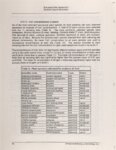
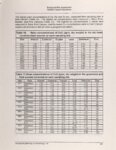
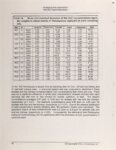
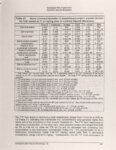
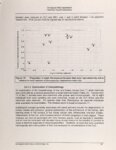
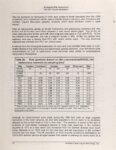
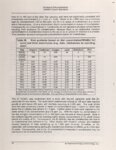
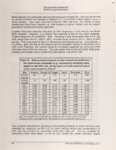
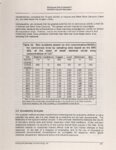
Show Ecological Risk Assessment Northern oquirm Mountains be more suitable for range that the Utah Department of Wildlife Resources estimates may approximately 250 animals. Although only one elk was observed in Kessler and Black Rock Canyons during the 1995 field work, their presence was obvious by the number of tracks and fecal piles on the sampling sites and the number of plastic marker flags chewed or pulled by elk and deer. Efforts are currently underway to capture and relocate elk from KUC property. Deer tissue residues from animals sampled during the 1993 hunting season in the Oquirrhs do not provide evidence that deer are affected toxicologically from the CoC concentrations in their foraging range (See Screening Level EcoRA, Risk Characterization). The low abundance of herbivorous and granivorous small mammals may be largely related As a result of the heavy grazing to the lack of suitable cover in the lower canyons. pressure observed throughout the lower canyons of the northern Oquirrh Mountains, several species of small mammals that prefer a dense vegetative cover, such as the voles, low in abundance. Voles prefer very dense vegetative cover where they construct were runways on the ground surface with vegetation overhead to reduce predation. Harvest mice were captured only in Black Rock Canyon, but as granivores that prefer to build nests in standing vegetation, they prefer denser stands of seed producing grasses and forbs than those found in most sampling sites. population numbers, that the Oquirrh Mountains are not herbivorous mammals. Tissues in the captured of adversely affecting populations herbivores did not exhibit lesions related to CoCo Also the estimated dietary concentration We conclude, on the basis of the weight of evidence and current environmental concentrations of CoC in the northern of Cu and Se were similar to those of Peromyscus, but no adverse effects were observed in Peromyscus. 3.1.3 Insectivorous birds and mammals No mammals or birds were captured that are true insectivores, although insectivorous birds were observed at all sampling sites. Although the estimated dietary concentrations of all CoC except Pb exceeded the estimated NOAELs at one or more sampling sites, only Se concentrations in invertebrates in Kessler and Black Rock Canyons are high enough to present a possible risk to insectivores species in the northern Oquirrh The relatively low abundance of insectivorous quality of the Mountains may be related, in part, to the habitat. For insectivorous birds and mammals, NOAELs were only established for Cd (15 ppm), Pb (94 ppm), and Se (140 ppm), due to the lack of adequate laboratory toxicity tests. Where there were no toxicity data, the NOAEL from a phylogenetically related species from another trophic group was used as an estimate of the insectivore NOAEL. The lower of the measured or estimated NOAELs for insectivorous birds or mammals from Table 26 was used in the risk quotients for insectivores in general. Although insectivorous birds and mammals primarily consume invertebrates, their foraging behaviors vary from aerial feeders (e.g., bats and swallows), to foliar feeders (e.g., chickadees), to ground-feeders (e.g., shrews and robins). To evaluate potential risks to insectivores, risk quotients were calculated for two groups: ground-feeding mammalian insectivores, such as shrews, and aerial and foliar insectivores that rarely feed on the ecological planning and toxicology, inc. 73 |