| OCR Text |
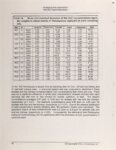
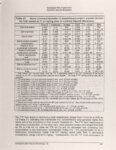
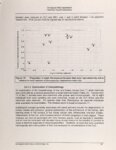
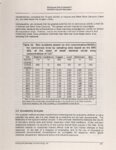
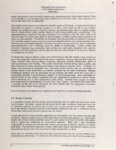
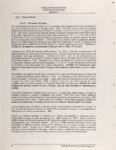
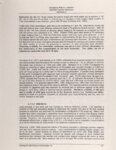
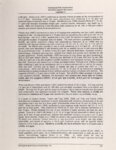
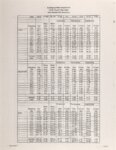
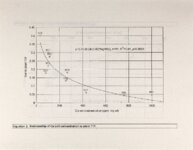
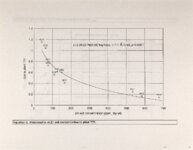
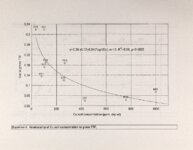
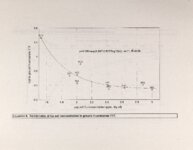
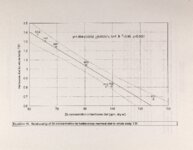
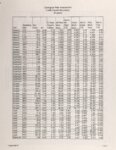
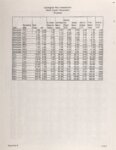
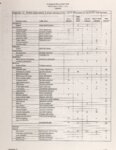
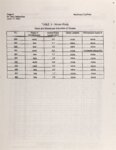
Show - Ecolog:ical Risk Assessment Northern Oquirrh Mountains (ppm, dry wt) of CoC in diets 01 herbivores, insectivores, and Peromyscus (omnivore) and proportion contributed from an estimated 2% soil ingestion rate. Diets based on mean of 11 sampling sites". Table 20. II II II Mean concentrations Mean Mean Herbivore Peromyscus Insectivores ,I CoC Arsenic mean plant invert. Diet % Diet % Diet % cone. conc. conc. soil conc. soil conc. soil 68.6 3.89 7.63 5.18 0.25 7.62 0.23 8.85 0.26 9.15 0.16 0.04 stdev 55.6 2.03 9.28 2.53 0.14 6.06 0.14 mean 11.7 1.26 5.09 1.47 0.16 3.91 0.05 5.22 stdev 13.1 1.08 3.60 1.29 0.08 2.69 0.04 3.68 0.04 mean 309 30.75 59.32 36.32 0.14 54.93 0.10 64.31 0.09 stdev 309 11.58 26.14 15.95 0.10 23.43 0.06 30.22 0.06 mean 278.8 5.80 10.29 11.26 0.58 14.20 0.39 15.66 0.35 stdev 311.8 9.38 9.96 12.86 0.21 13.94 0.15 15.06 0.15 Selenium mean 5.3 3.23 4.10 3.27 0.07 3.88 0.04 4.12 0.04 st(Jev 3.1 2.89 3,78 2.85 0.08 3.03 0.04 3.72 0.04 Zinc mean 236 76.96 168.9 80.15 0.05 139.6 0.03 170.3 0.03 Cadmium Copper Lead stdev 1 Soil conc. Herbivore aiet = 24.48 46.70 27.9B 0.04 36.30 0.03 48.09 0.02 237 = 98% plants, 2% soil; Peromyscus diet 61 % invertebrates, 37% plants, 2% soil; and Insectivore diet = 98% invertebrates and 2% soil. 2.3.4 Relati,onship of CoC Co'ncentrations Across Media The relationship of CoC concentrations from one component of the environment to another component that consumes or extracts nutrients and energy from the first is expressed as a value known as a bioaccumulation factor or trophic transfer factor (TTF). The TTF provides insight into the extent of contaminant transfer between trophic levels and can be used to estimate exposures to higher trophic levels. Although it is often assumed that TIF s are constants over the range of concentrations in source material, analyses of data from this assessment indicate that in many cases the TTF is a function of the concentration in source material, meaning the TTF at a given site decreases with increasing concentration in diet or environmental media. Plant accumulation of CoC from soil was examined by comparing the composite soil concentration to the average concentration in a.1I plants from each sampling site. The ratio of CoC concentrations in plants to concentrations in soils averaged less than one, except for Se in forb species where the concentrations averaged 1.08 times the soil concentration (Table 21). The TTFs for Cu and Zn in plants varied significantly with the concentration in the soil. Where the TTF s varied as a function of soil or diet, the TTF is represented by an equation and range of values (Table 21). A graphical presentation of the relationship defined by each equation is in Appendix 8. 52 ecological planning and toxicology, inc. 1 |