| OCR Text |
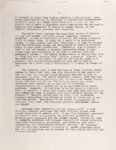
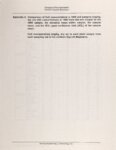
Show - Ecological Risk Assessment North Oquirrh Mountains Appendix 2 2.4.1 Toxic Effects 2.4.1.1 Domestic Animals The recommended growth promotant level of arsenilic acid (the least toxic of the arsenicals) in 1980). The NRC has set maximum tolerable the diet for swine and poultry is 100 ppm (NRC, dietary levels for domestic animals at 50 ppm for inorganic forms and 100 ppm for organic forms of As. The most complete dose-response studies in domestic animals were conducted by Bucy et st. (1954, 1955) who fed sheep (Ovis aries) diets containing 5.7,11.7,17.1,34.2.68.4.142.4. or 284.8 ppm As (2 to 3 animals per dose) as potassium arsenite or arsenilic acid for 84 days with no measurable adverse effects. At 570 ppm As as arsenfhc acid or potassium arsenite. Buoy et al. (1955) observed convulsions and weight loss beginning on day 56 of exposure (one animal per each As additive) anct similar signs at 1,139 ppm beginning on day 26. Therefore, a NOAEL for As ingestion by ruminants is 285 ppm with a LOAEL of 570 ppm. Hermayer et al. (1977) fed chickens (Gallus gallus) 1, 10. 100, or 1,000 ppm As pentoxide for 56 days (4 animals per group) witl1 effects occurring at 100 ppm treatment group (decreased food Chickens fed 23.3 ppm As as dodecylamine p consumption and egg production). of arsenHic acid for the same length of time showed 9 or 45 for weeks ppm chloropl1enylarsonate no ill effects (Woolson, 1975). Donoghue et al. (1994) investigated the amount of As transferred to eggs when chickens were fed diets containing 14,28,56, or 112 ppm elemental As and found A NOAEL for herbivorous birds no ill effects on the hens during the 10 week study period. based on these data would be set at 112 ppm with insufficient information to set a LOAEL value. Rats (Rattus norwegicus) fed 50 ppm As trioxide for 21 days had elevated tissue As levels but adverse physiological effects (Woolson, 1975). It is important to note that rats store As in unlike most mammals that rapidly excrete ingested blood hemoglobin, excreting it very slowly urine As in the inorganic (Eisler, 1994). However, these two rat studies provide the only available data for chronic As toxicity in mammals other than ruminants, so a NOAEL for other no -- herbivorous animals should be set at 50 ppm, with lOAEL. no data available for determining a Cats (Felis domesticus) exhibited chronic toxicity at 1.5 mg/kg body weight (approx. 10 ppm) of inorganic arsenate or arsenite (Pershagen and Vahter, 1979) while dogs (Canis familiaris) showed no j,II effects after 90 days OR a diet containing 30 ppm methanearsenic acid (Hood, 1987 as reported by eisler, 1994 - original article not available). These data suggest a LOAEL for carnivorous mammals of 10 ppm, with no data available for determination of a NOAEL. Arsenic inhibits cancer formation in species having a high incidence of spontaneous cancers. In fact, As may be the only chemical for which there is sufficient evidence for carcinogenicity in humans but not in other animals (Eisler, 1988). known teratogen in animals as it crosses the placenta in mammals and is into incorporated eggs of birds (Donoghue et al., 1994; Hood et al., 1987). Hanlon and Ferm showed that hamsters exposed to 20 mg/kg-body weight of As during the critical phase of (1986) Arsenic is a embryogenesis nact malformed fetuses. Lee et al. (1986) showed chromatid breaks and exchanges in Chinese hamster ovary cells at 90 ppm As in a culture medium, in a dose dependent manner. Stanley et al. (1994) found no teratogenic effects in mallard ducklings, although As did concentrate in the eggs. However, there is insufficient information concerning teratogenesis as a result of chronic dietary exposure to set a toxicity threshold for feed. 6 ecological planning and toxicology, inc. |