| OCR Text |
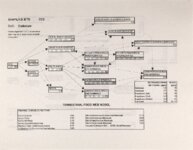
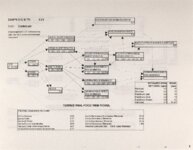
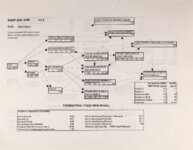
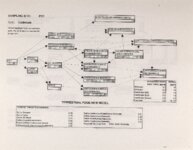
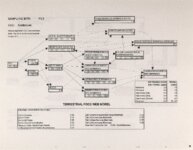
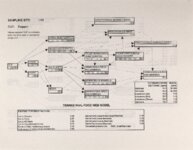
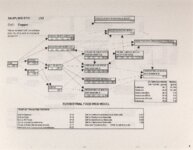
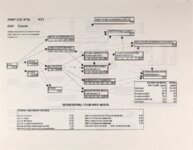
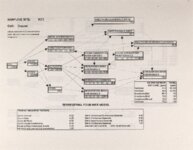
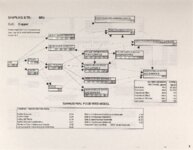
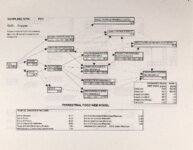
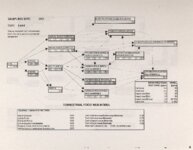
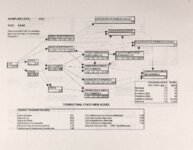
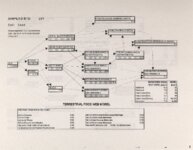
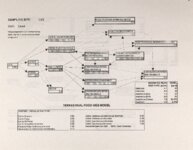
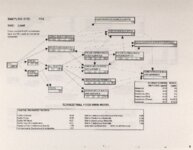
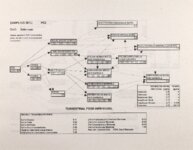
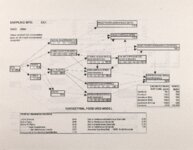
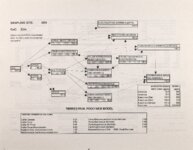
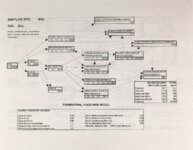
Show Ecological Risk Assessment Northern Oquirrh Mountains bioavailability and physiological response, but these relationships in complex mixtures of For example, increasing dietary molybdenum decreases CoC are difficult to model. order of magnitude more Cu to be consumed without an Cu potentia toxicity, allowing deleterious effects. Arsenic enhances the rate of elimination of Se, thereby reducing Se's Cu and Se protect against Zn toxicosis, but Cd enhances it. Similarly, Many other physiological changes occur due to interactions of the various metals and Consequently, metalloids, particularly among those that are essential micronutrients. with CoC effects observed of the functional of models relationship regression concentrations treated as independent variables cannot incorporate all the influences of apparent toxicity. interactions among CoCo There are many uncertainties present in weighing the evidence of risks of adverse effects from CoC exposure. Most of the uncertainties are related to the limited information on the severity of existing effects and to incomplete understanding of ecological relationships in the Oquirrh Mountains. Consequently, best professional judgment is necessary to assess the potential risks. extent and Using risk quotients for preliminary assessments provides a means to identify the locations and CoC of greatest concern. However, the greatest uncertainty in making a correct risk conclusion (i.e., concluding that there is or is not a potential risk) occurs when quotient values are near one. Site-specific effects data can be extremely valuable in verifying the existence and severity of effects predicted from a risk quotient. However, the lack of effects is not proof that effects do not occur. The scientific method is not an adequate tool to prove a negative (i.e., prove the nonexistence of effects). Consequently, risk quotients and site-specific effects information must be synthesized in the overall context of our understanding of the ecological system and knowledge of toxicological effects observed in other systems. Another source of uncertainty is the confounding influence of other variables, such as habitat quality, on the assessment of CoC risks. There were no site-specific data indicating adverse effects to small mammals from exposure to CoCo However, the population sizes of vertebrates and invertebrates seemed to be related to the quality of the habitat. The confounding influence of habitat quality makes the assessment of CoC effects more difficult, but if CoC concentrations were adversely affecting the health and reproductive potential of small mammals, this should have been observed in the histological and in the relationship between CoC concentration in animals with reproductive activity and the numbers of animals captured. For example, no CoC-related effects were observed in the histological examination of livers and kidneys of herbivorous and granivorous mammals, with the low numbers of voles captured possibly related to the absence of adequate vole habitat on the sampling sites. examinations of effects to, and concentrations of CoC in, animals that are primarily insectivorous or carnivorous was more uncertain because none were collected for analysis Estimation and very little toxicity testing has been done with animals from these trophic groups. In the terrestrial food web model (Appendix 12), trophic transfer factors were based on Peromyscus for estimating concentrations in insectivores because Peromyscus consume invertebrates as a larger proportion of their diet. Trophic transfer factors for carnivores ecological planning and toxicology, inc. 83 |