| OCR Text |
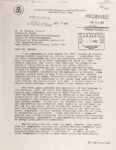
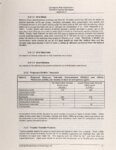
Show 3 , II broader in scope than Federal Subtitle C regulations. Also, state requirements may be developed to address the mismanagement of· wastes which are exempt from Subtitle C that is, the ·state's solid waste or hazardous waste regulations can be used to regulate the management of federally exempt wastes, if the or -- legislation provides state's such authority. The third issue concerns the requlatol status of certain oil and gas wastes, including unused conunercial chemical In the FR clarification notice, EPA stated a general products. !'rule o:f thwubl' thatl in order for a waste to be considered ft in conta,ct or come exempt, it must ·either come from II down-hole , with the production stream tor the purpose of removing produced water or some other contaminant. (GenerallYI when a product is used in E&F and becomes a uniquely associated. waste, it has either been sent down-hole or has come in contact with the .. __ The Agency stopped short of saying this rule production strea.) of thumb was more binding than a general guideline. However, we believed that it was useful o provide the rule of thumb as a _g.e.n.E;:r;l asy-ta-understand guideline that can be used by operators as a first step in determining if a waste is exempt or I ... not. The industry view is that, the rule of umb limiting exempt wastes to those that have come from down-hole is too that it does not; include, unused materials spilled or narrow left in as The Agency disagrees, howev er , with the view residuals on site. that discarded unused materials are, or should be, exempt wastes. First, EPA does not believe that placing excess and unused materials that exhibit one or more of the hazardous characteristics in a reserve pit is an environmentally sound Moreover, it continues to' be the Agency's position practice. in that, general, a waste must either have come from down-hole have otherwise or in contact with the production strea for the purpose of removing contaminants in order to be considered uniquely associated with efforts to locate or remove oil or gas from the ground. Regardless of the intent in preparing the come material, only used, are exempt. and therefore uniely·associated, Although this interpretation may previous ihdustry practices that have unused materials pits, to practice in rserve wastes shift in some routinely placed soe cause a it ay also encourage operators minimization and pollution prevention by for the volumes needed, looking far ways resources and increase recycling of unused materials, waste planning more carefuly to conserve improving housekeeping procedures, and selecting less toxic ingredients for formulations whenever possible. We recognize that it wil not, however, eliminate all excess materials since not all contingencies can be planned for when mixing dri.lling and Ylorkover fluids. |